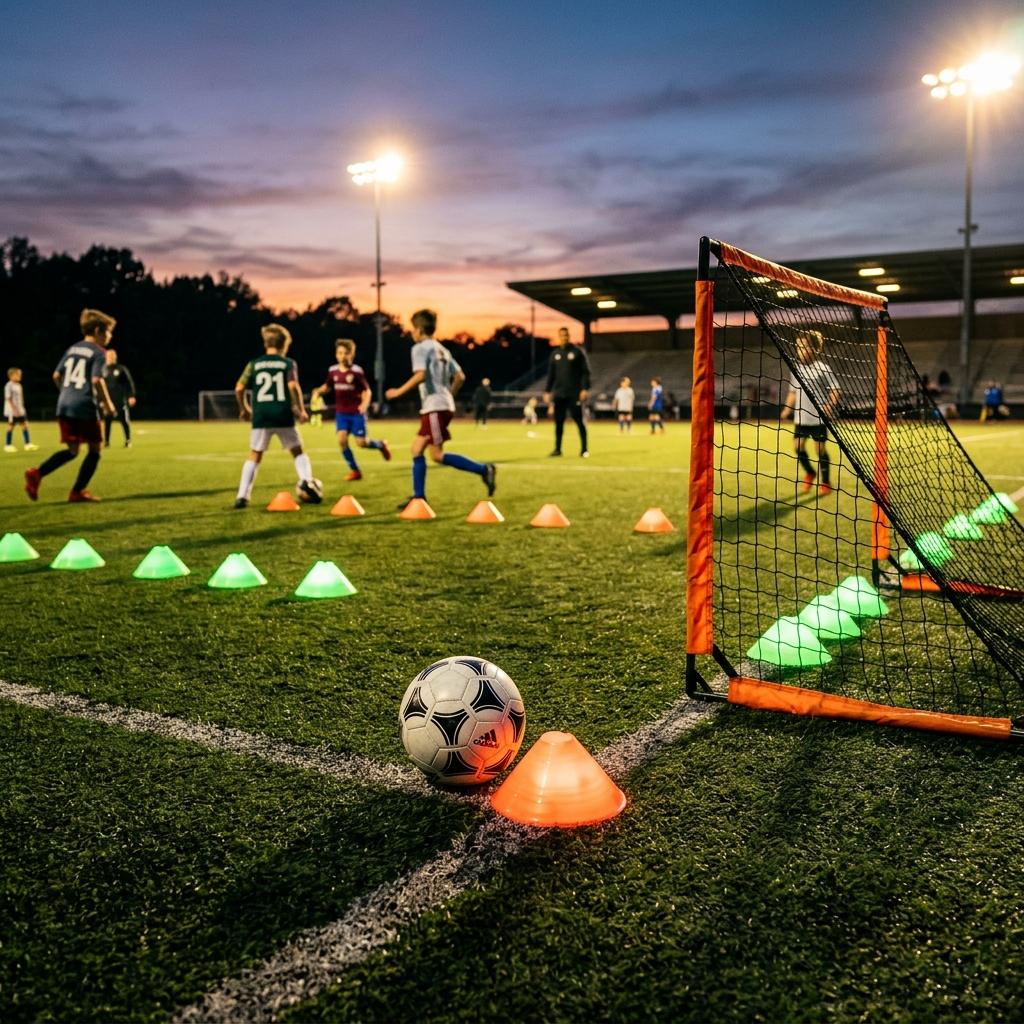
Youth soccer participation in the US reached 3.6 million registered players in 2025 according to US Soccer, making it the second most popular youth sport behind basketball. But here’s the disconnect: the average youth soccer player only touches the ball for 2-3 minutes during a 60-minute game. The players who develop fastest are the ones training at home between practices.
For more on this topic, see our guide on Best Youth Soccer Ball for Training and Game Day.
You don’t need much equipment. The most impactful gear fits in a duffel bag and costs under $150.
The first-cart version of that bag (ball, cones, one soccer rebounder — and what to skip) is essential soccer training equipment. This page is the wider youth catalog.
For more on this topic, see our guide on Best Youth Hockey Training Equipment & Safety Gear.
TL;DR: The three highest-impact training purchases for youth soccer are a quality rebounder ($60-120), a set of agility cones ($10-15), and a proper size-appropriate ball ($20-30). Add a solo training belt ($15) for unlimited repetitions without chasing the ball. Skip the smart balls until the player has solid fundamentals.
Ball Control: The Foundation of Everything
Ball mastery is what separates elite youth players from average ones. A 2024 study from the English Football Association found that professional players average 10,000+ hours of ball contact before signing their first professional contract. That contact happens mostly outside of organized practice.
Solo Training Belts
The single best investment for a young soccer player training alone. A bungee cord attaches to the ball and wraps around the waist, so the ball returns after every kick. No chasing, no stopping — just continuous repetitions.
What to buy: The SKLZ Star-Kick Solo Trainer ($15) fits balls size 3 through 5. It’s adjustable, durable, and eliminates the biggest barrier to solo practice — spending half the time chasing the ball.
Drills to run: 100 right-foot passes against a wall, 100 left-foot passes, 50 volleys each foot, 50 instep drives. This takes about 20 minutes and gives more ball touches than most kids get in a full week of team practice.
Rebounders
A rebounder is the next step up from wall passing. The angled return surface adds unpredictability, forcing faster reactions and better first-touch control.
What to buy:
- Budget: Tekk Trainer Rebounder ($60) — 4x4 foot surface, adjustable angle. Great for passing and first-touch work.
- Mid-range: JAMBR Multi-Sport Rebounder ($120) — 6x4 foot surface with multiple rebound angles. Works for heading, volleying, and ground passes.
- Premium: Crazy Catch Wildchild ($180) — The erratic rebound surface creates unpredictable returns that develop lightning-fast reactions. Used by professional academies worldwide.
Space needed: A flat area at least 20x15 feet. Works on grass, turf, or concrete (use a softer ball on concrete to protect the rebounder surface).
Speed and Agility Equipment
Soccer demands more changes of direction per game than any other major sport. A 2025 GPS tracking study found that youth soccer players average 140+ direction changes during a single game. Training agility separately from ball work builds the movement foundation that technical skills sit on top of.
Agility Cones and Poles
What to buy: A 50-pack of disc cones ($10) and 6 slalom poles ($20). This setup covers every agility drill a youth player needs: T-drills, 5-10-5 shuttles, box drills, and zig-zag dribbling courses.
Key drill: Set up 10 cones in a line, 2 feet apart. Dribble through with the right foot only, then left foot only, then alternating. Time each run. Most youth players improve their time by 20-30% within 4 weeks of daily practice.
Speed Ladders
Same as football — the agility ladder builds foot speed and coordination that directly transfers to the field.
Soccer-specific ladder drills: Lateral in-out (mimics defensive shuffling), forward two-in (mimics quick feet in tight spaces), backward single-step (mimics backpedaling as a defender).
Shooting and Finishing Equipment
Target Sheets and Goal Reducers
Full-size goals are expensive and impractical for backyards. Goal reducers attach to existing goals (or fences) and create specific target zones that develop shooting accuracy.
What to buy: A quality backyard soccer goal such as a 6x4 portable goal with a target sheet gives a complete shooting station. The target sheet has numbered zones, so players can practice deliberate placement rather than just blasting the ball.
Smart Soccer Balls
Smart soccer balls pair with companion apps to guide footwork drills or track ball metrics. While the data is interesting, it is not a replacement for fundamental skill repetitions.
What to buy: The DribbleUp Smart Soccer Ball is the most practical choice because it uses your phone’s camera to track ball-control drills and provide real-time feedback. Older models like the Adidas miCoach are discontinued and should be avoided due to lack of app support.
For a complete breakdown of features and setup requirements, see our guide to the best digital soccer ball.
Skip if: Your player is under 12 or doesn’t yet have consistent technique. Focus on volume of practice with a regular ball first.
Goalkeeper Training Equipment
GK training requires specialized gear that general field players don’t need.
Essential GK equipment:
- Reaction ball ($8): An irregularly shaped ball that bounces unpredictably. Throw it against a wall for rapid-fire reaction saves.
- GK gloves ($25-50): Reusch Attrakt Starter Solid ($30) for youth keepers. Replace every season — grip degrades quickly.
- Mini hurdles ($20 for 6): Build the explosive lateral movement that makes the difference between a save and a goal.
- Diving mat ($40): Essential for practicing diving technique on hard ground without getting hurt.
Age-Appropriate Gear Guide
| Age | Ball Size | Focus Areas | Key Equipment |
|---|---|---|---|
| 4-6 | Size 3 | Fun, basic coordination | Cones, small goal |
| 7-9 | Size 4 | Ball control, passing | Solo trainer, cones, rebounder |
| 10-12 | Size 4/5 | Dribbling, shooting, 1v1 | Rebounder, agility set, target goal |
| 13+ | Size 5 | Tactical awareness, speed | Full agility kit, smart ball, film |
Budget Training Packages
Starter Kit ($50)
- Solo training belt ($15)
- 50 disc cones ($10)
- Proper size ball ($25)
Development Kit ($120)
- Everything in Starter, plus:
- Tekk Trainer rebounder ($60)
Competitive Kit ($250)
- Everything in Development, plus:
- Speed ladder ($25)
- Slalom poles x6 ($20)
- Reaction ball ($8)
- GoSports target goal ($75)
Frequently Asked Questions
How many hours per week should a youth soccer player train at home?
US Soccer recommends that total weekly training hours should not exceed the player’s age (a 10-year-old should train no more than 10 hours total including team practices). For at-home training specifically, 3-4 sessions of 20-30 minutes is optimal for players ages 8-14.
Are private soccer lessons worth the money?
Private lessons ($50-100/hour) can accelerate development, but only after the player has a baseline of fitness and ball comfort. For beginners, solo practice with a rebounder and cones provides more touches per dollar. Once a player has solid fundamentals and specific weaknesses to address, private coaching becomes valuable.
What’s the best rebounder for a small backyard?
The Tekk Trainer at 4x4 feet is the most compact option. It folds flat for storage and works in spaces as small as 15x10 feet. For even tighter spaces, the SKLZ Quickster Pop-Up Goal ($30) with a wall pass provides a minimal-footprint alternative.
Should my kid use a weighted soccer ball for training?
Not before age 13. Weighted balls (size 5 at 16-18 oz vs standard 14-16 oz) can improve leg strength but also alter kicking mechanics in developing players. After age 13, occasional weighted ball work (1-2 sessions per week) can complement regular training.
How do I know if my kid needs new soccer cleats?
Replace cleats when the studs are worn flat, the heel cup is crushed and no longer holds the foot snugly, or there’s less than a thumb-width of space at the toe. Youth feet grow roughly one size per year, so plan for new cleats each season. Molded cleats ($30-50) are best for recreational players; removable studs ($60+) only matter for competitive players on varying field conditions.
How we evaluate: We combine manufacturer documentation, independent user feedback, and parent-focused criteria like safety, durability, ease of use, and long-term value.
Accuracy note: Pricing and product availability can change. Verify details on the retailer site before purchase.
Affiliate Disclosure: Sports Gadget Review is a participant in the Amazon Services LLC Associates Program. When you purchase through links on this page, we may earn a commission at no extra cost to you. Editorial recommendations are made independently.