Best Backyard Soccer Goals: 2026 Quick Answer
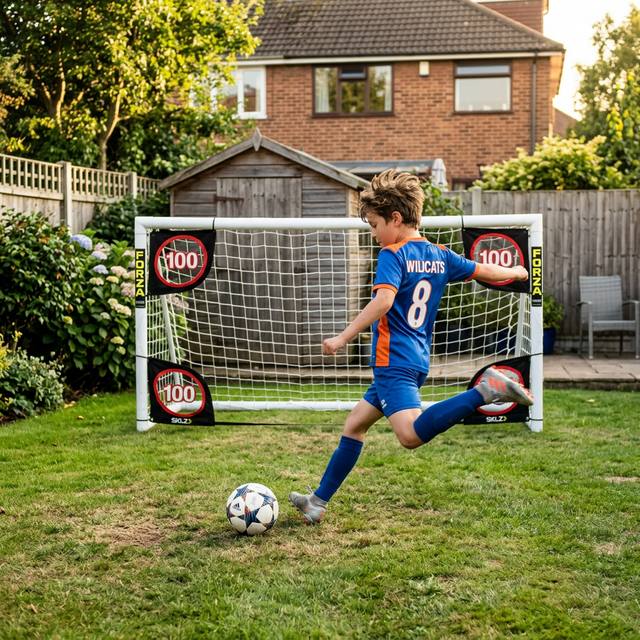
The best backyard soccer goal for most families in 2026 is a 6x4 or 8x5 anchored goal with a frame strong enough for daily youth shooting. For younger kids, a PUGG pop-up pair is easier and safer. For players ages 9-14, a Franklin or GoSports 6x4 steel goal is the most practical default. For older players with more space, a 12x6 portable training goal like the PowerNet bow-frame gives a more realistic target.
Listing check: Amazon “backyard soccer goal” titles mix 4-foot pop-up pairs, 6x4 steel frames, 12x6 bow nets, and rebounders sold as goals. Confirm the assembled width × height, frame material (steel vs fiberglass vs PVC), whether stakes or sandbags are in the box, and that the photo is a goal — not a rebounder. ASINs and “soccer goals for backyard” product-code searches go stale; read the variation dropdown. Street prices, ratings, and review counts all move — treat the live listing as the source of record, not this page.
Who should buy this — and who should skip
Buy a 6x4 steel frame when a player 8–13 will shoot most weeks and you have grass you can stake. That is the default cart on this page.
Buy a pop-up pair when the kids are 4–8, the yard is shared, or the goal has to live in a closet between sessions.
Skip first when:
- You cannot anchor the frame. An unstaked steel goal is a tip-over hazard, not a training tool.
- The shooting depth is under ~20 feet. A smaller target plus a soccer rebounder beats a 12x6 jammed against a fence.
- Nobody will take the net down or cover it. Sun-rotted pop-ups are a skip-buy that already happened.
- You actually wanted first-touch volume, not a shooting target. Start with the youth soccer home training program instead.
This desk compared manufacturer dimensions, anchoring hardware, and the owner complaints that repeat (rust at chips, nets that fail first, PVC that flexes). It is not a lab shot test.
A backyard soccer goal is a portable or semi-permanent soccer net scaled for residential spaces. Common sizes range from 4x3 feet for younger children to 12x6 feet for older youth players. For scale, a full-size match goal is 8 yards wide by 8 feet tall under the IFAB Laws of the Game — nobody needs that at home, and every size on this page is a deliberate step down from it. The best choice depends on the player’s age, the available shooting depth, the frame material, and how securely the goal can be anchored.
If you found this page through a product-code search — typing an Amazon ASIN plus a phrase like “soccer goals for backyard” — treat that as a clue that Google is matching Amazon product listings to backyard soccer-goal intent. Product codes can change, expire, or point to third-party listings, so confirm the exact size, frame material, anchors, and return policy before buying. The buying decision should still start with age, yard size, frame stability, and anchoring — not the product code alone.
Quick Picks
| Need | Best fit | Why it works |
|---|---|---|
| Best for most families | Franklin Sports 6x4 steel goal | Stable enough for real shots without needing a huge yard |
| Best for ages 4-8 | PUGG 6 ft / 4 ft pop-up pair | Fast setup, soft frame, easy small-sided games |
| Best portable training goal | GoSports Elite pop-up (6x4 or 12x6) | Better portability than steel with more structure than flat pop-ups |
| Best for older youth players | PowerNet 12x6 bow-frame goal | Closer to game-size shooting angles |
| Best upgrade | SKLZ target sheet or Rukket rebounder | Turns random shooting into deliberate accuracy practice |
Related soccer guides: build a full backyard setup with the youth soccer home training program, compare rebound work in the soccer rebounder guide, add shooting volume with a soccer ball launcher for solo practice, or round out footwork with agility ladder drills for speed training.
How We Researched
We did not hands-on test every goal in a lab, and we do not publish star ratings or review counts on this site — we have no genuine aggregate review data, and invented figures help nobody. Picks below reflect manufacturer specifications, recurring patterns in verified-buyer feedback, brand reputation, and category research, checked against current product pages before this update. Read the live Amazon listing for current prices, ratings, and hardware details.
We researched backyard soccer goals by the factors that decide whether families keep using them after the first weekend:
- Age fit: smaller pop-up goals for young players, stronger rectangular goals for older shooters.
- Frame and net strength: steel and reinforced fiberglass handle harder shots better than light PVC.
- Setup time: goals that take too long to assemble usually stay in the garage.
- Anchoring: stakes, sandbags, or weighted bases matter more than marketing photos.
- Yard fit: goal width only matters after there is enough safe shooting depth.
Current manufacturer pages were checked for PUGG pop-up goals and Franklin, GoSports, and PowerNet portable goals before this update.
What Matters Before Brand
Backyard soccer goals fail for predictable reasons. They are too light, too large for the space, hard to anchor, or scaled for a different age group. A cheap pop-up can be perfect for a 6-year-old and useless for a 13-year-old. A heavy steel goal can be excellent in a flat yard and annoying on a driveway where it needs to move every weekend.
We judge backyard goals by five practical factors:
- Age fit: younger players need safe, smaller targets; older players need realistic angles.
- Frame strength: steel and reinforced fiberglass handle hard shots better than PVC.
- Anchoring: any goal that tips or slides becomes a safety problem.
- Yard footprint: a goal needs shooting space in front, not just room for the frame.
- Training value: target sheets, rebound behavior, and easy setup determine whether kids actually use it.
Best Backyard Soccer Goals Compared
| Goal type | Best age range | Best surface | Portability | Main tradeoff |
|---|---|---|---|---|
| 4x3 / 4 ft pop-up pair (PUGG) | 4-8 | Grass, park, beach | Excellent | Too small for older players |
| 6x4 steel frame (Franklin / GoSports) | 8-13 | Grass or flat turf | Fair | Needs anchoring and setup time |
| 6x4 quick-set fiberglass (GoSports Elite) | 7-12 | Grass, park, yard | Very good | Less rigid than steel |
| 8x5 steel frame | 10-15 | Yard or training area | Low | Takes permanent space |
| 12x6 bow-frame portable (PowerNet) | 12+ | Larger yard or field | Moderate | Needs a wider shooting area |
Best Overall for Most Families: Franklin Sports 6’ x 4’ Steel Frame Soccer Goal
A 6x4 steel goal is the safest default for families with youth players who are past the tiny pop-up stage. It is large enough for real finishing practice, small enough for a normal yard, and rigid enough to stay useful after players start striking the ball harder. The Franklin Sports 6’ x 4’ Steel Frame Soccer Goal is a strong representative of this category: a powder-coated steel tube frame, a net that secures around the full frame, and ground stakes meant to lock the base to grass. GoSports makes a comparable 6x4 steel goal if you prefer that brand or find it on sale. Avoid thin PVC goals for daily use — PVC flexes, cracks in cold weather, and rarely survives hard shots for long.

Review evidence at a glance:
- Durability: Verified buyers describe the powder-coated steel frame handling repeated youth finishing without the flex of PVC, with the net (not the frame) as the part most often replaced first. Bare steel exposed at scratches or chips can rust if left untouched.
- Assembly time: Most households report quick first assembly with included hardware and ties; reassembly after moving the goal for mowing is faster than the initial build.
- Weather resistance: The powder coat resists everyday rust, but the goal is not fully weatherproof. For longest life, store it indoors or under cover during the off-season and touch up any chipped paint.
- Owner consensus: Among the better-reviewed 6x4 steel goals on Amazon — recurring complaints center on shipping damage and net wear rather than frame failure.
Check price for the Franklin Sports 6x4 steel goal on Amazon
Best for: families with players ages 8-13 who want one backyard goal for daily shooting.
Best for Young Kids: PUGG Pop-Up Soccer Goals (4 ft and 6 ft)
For ages 4-8, a pop-up pair is usually better than one large frame. Younger players get more touches from small-sided games, short finishing drills, and quick setup, and parents avoid the storage and anchoring headaches of a larger goal. PUGG is the original and best-known pop-up goal brand, sold in 4-foot and 6-foot pairs with a flexible spring frame and included stakes. Once a player starts driving the ball with real pace, move up to a stronger frame.

Review evidence at a glance:
- Durability: PUGG’s fiberglass spring-pole frame and sewn net are widely reported to last multiple seasons of casual youth use — among the best longevity in the pop-up category. They are youth game targets, not hard-shot training nets.
- Assembly time: Pop open in seconds; folding flat is quick once the twist-fold technique is learned (the first few folds are the learning curve).
- Weather resistance: The net and fabric sleeve degrade with prolonged sun and rain exposure, so bring them indoors between sessions. Steel stakes are included for grass.
- Owner consensus: Among the highest-rated pop-up goals on Amazon; complaints cluster around the fold-up learning curve and sun-degraded fabric after long outdoor exposure, not frame breakage.
Check price for PUGG pop-up soccer goals on Amazon
Best for: ages 4-8, small-sided backyard games, and families who need the goal to disappear after practice.
Best Portable Training Goal: GoSports Elite Pop-Up Goals (6x4 and 12x6)
Between a flat PUGG-style pop-up and a bolted steel frame sits the GoSports Elite pop-up line. These goals use a quick-set frame that stands up to harder shots than a flat pop-up while still folding into a bag that fits in a trunk. The 6x4 size suits most backyards and players 7-12; the 12x6 version is a realistic target for older players whose parents do not want a semi-permanent frame in the yard.

Review evidence at a glance:
- Durability: Owners describe the frame surviving youth shooting better than flat pop-ups, though it is still less rigid than steel — very hard shots can walk an unstaked goal backward.
- Assembly time: Sets up and folds down quickly once the folding motion is learned; the 12x6 is a two-person job the first few times.
- Weather resistance: Better when stored between sessions; the fabric and netting age fastest in constant sun.
- Owner consensus: Praised for the portability-to-stability ratio; recurring complaints involve bent poles after windy, unstaked use and confusion between the multiple sizes in the listing.
Check price for GoSports Elite pop-up soccer goals on Amazon
Best for: families who split practice between the yard, a park, and a trunk.
Best for Older Youth Players: PowerNet 12x6 Bow-Frame Training Goal
Once a player is 12 or older and striking with real power, a 6x4 target starts rewarding shots that a keeper would save anyway. A 12x6 bow-frame goal like PowerNet’s portable training goal gets closer to game-width shooting angles without the permanence of a full-size frame. The bow shape flexes on impact rather than fighting it, ground stakes are included, and the whole thing packs into a carrying bag for off-season storage.

Review evidence at a glance:
- Durability: The fiberglass bow frame is reported to hold up to repeated hard youth and teen shooting; net wear is the normal failure point, and replacement nets are sold separately.
- Assembly time: First setup takes the longest of the picks here and reads as a two-person job; teardown is faster with practice.
- Weather resistance: Fine in fair weather, but bow frames and nets last longest when taken down for winter rather than left to collect snow and ice.
- Owner consensus: Consistently described as the value pick in the 12x6 class; complaints center on anchoring hardware and the learning curve of the first assembly.
Check price for the PowerNet 12x6 bow-frame soccer goal on Amazon
Best for: players 12+ with a wide, deep shooting area and somewhere to store the goal off-season.
Best Upgrade: SKLZ Target Sheet or Rukket Rebounder
The cheapest way to make any goal on this page more valuable is to change what players aim at. An SKLZ target sheet hangs in the mouth of the goal and turns random blasting into deliberate corner-picking. A Rukket-style rebounder sits in front of the frame and rolls the ball back, so finishing practice doubles as repetition without a retriever. Our full comparison of return-and-rebound options lives in the soccer rebounder guide.

Check price for SKLZ soccer target sheets on Amazon · Check price for Rukket soccer rebounders on Amazon
Best for: players who already have a goal and have stopped improving with it.
Sizing Deep-Dive: Which Goal for Which Age
Age determines frame strength and target size more than any brand difference:
- Ages 4-8 — pop-up pair (4 ft or 6 ft): Two small goals create a mini-field with boundaries, which is what keeps young kids touching the ball. A single big goal at this age mostly collects leaves.
- Ages 8-13 — 6x4 (or 8x5 with room): The standard backyard finishing size. Big enough that placement matters, small enough that a missed shot does not sail into a neighbor’s fence.
- Ages 12+ — 12x6 with depth: Realistic angles for players striking with power — but only if you have roughly a full car-length of clear shooting space in front and a way to anchor the frame.
Two rules of thumb that beat the size chart: first, measure the shooting depth before the goal width — the frame is only the back of the practice. Second, check the net height, not just the width: a taller net lets keepers and chippers practice, while low pop-ups shut those drills down.
Anchoring and Safety: The Part Amazon Listings Bury
Movable soccer goals tip over, and the consequences are serious enough that the U.S. Consumer Product Safety Commission publishes Guidelines for Movable Soccer Goal Safety. The short version for a backyard:
- Anchor every session, not every season. Stakes on grass; sandbags or weighted bases on turf, driveways, and any hard surface where stakes will not hold.
- Never let kids climb, hang from, or move the goal. Most tip-over injuries happen during play on or around the frame, not during shooting.
- Check hardware after storms and before each season. Stakes bend, ground gets soft, and quick-release clips loosen.
- Store it flat or take it down when it will not be used for weeks — an unattended, unstaked goal is the worst version of itself.
If you cannot commit to anchoring, buy the pop-up pair instead. Its worst failure mode is a bent pole, not a fallen frame.
Making the Net Last More Than One Season
Nets and fabric, not frames, are what families end up replacing — and listing pages rarely make replacement parts easy to find. Before buying any goal here:
- Confirm the brand sells replacement nets separately and note the price; a goal with no replacement net is a subscription to a new goal.
- Take pop-ups and bow-frames indoors or under cover between sessions and for winter. UV is what kills them, not shots.
- Touch up chips and scratches on steel frames with rust paint before winter, and store stakes with the goal so next season’s setup is not a scavenger hunt.
How a Goal Becomes Training Instead of Yard Furniture
The families who get value out of a backyard goal pair it with structure. Pick corners, not just power. Alternate first-touch finishes — control, then shoot — so the goal teaches two touches per repetition. Rotate in the agility ladder drills for warm-ups, use a soccer ball launcher or rebounder when no parent can feed balls, and follow a full weekly plan with the youth soccer home training program. And when the season starts, the gear questions change — whether kids actually need soccer cleats is a better spend of worry than goal brand.
Frequently Asked Questions
What is the best soccer goal for a backyard?
The best soccer goal for most backyards is a 6x4 or 8x5 steel or fiberglass goal that can be anchored securely. Younger kids can use a 4x3 pop-up pair, while older youth players usually benefit from a sturdier 6x4 or 12x6 training goal.
Are pop-up soccer goals good for backyard training?
Pop-up soccer goals are good for younger players, small-sided games, and portable practice, but they are not the best choice for older players taking hard shots. For daily shooting practice, a steel or reinforced fiberglass frame is usually better.
How do you stop a backyard soccer goal from tipping?
Use ground stakes on grass, sandbags or weighted bases on hard surfaces, and never let children climb on the frame or net. Any full-size or steel backyard soccer goal should be anchored before use — the CPSC’s movable-goal guidance exists because unanchored goals do tip.
What size soccer goal should I buy for a 10-year-old?
Most 10-year-olds do well with a 6x4 backyard soccer goal. It is large enough for real finishing practice but not so large that every shot feels easy.
The Bottom Line
For most families, buy the anchored 6x4 steel goal (Franklin, with GoSports as the alternate cart) and spend the difference on a target sheet. Families with players 4-8 should start with a PUGG pop-up pair and accept they will hand it down, not keep it forever. Players 12+ with a deep yard get the most from a 12x6 bow-frame. Whichever you choose, the goal only pays off anchored, stored out of the sun, and used inside a practice structure — the drills and companion gear in our soccer rebounder guide and home training program are what turn a net into a season.
How we evaluate: We combine manufacturer documentation, independent user feedback, and parent-focused criteria like safety, durability, ease of use, and long-term value.
Accuracy note: Pricing and product availability can change. Verify details on the retailer site before purchase.
Affiliate Disclosure: Sports Gadget Review is a participant in the Amazon Services LLC Associates Program. When you purchase through links on this page, we may earn a commission at no extra cost to you. Editorial recommendations are made independently.