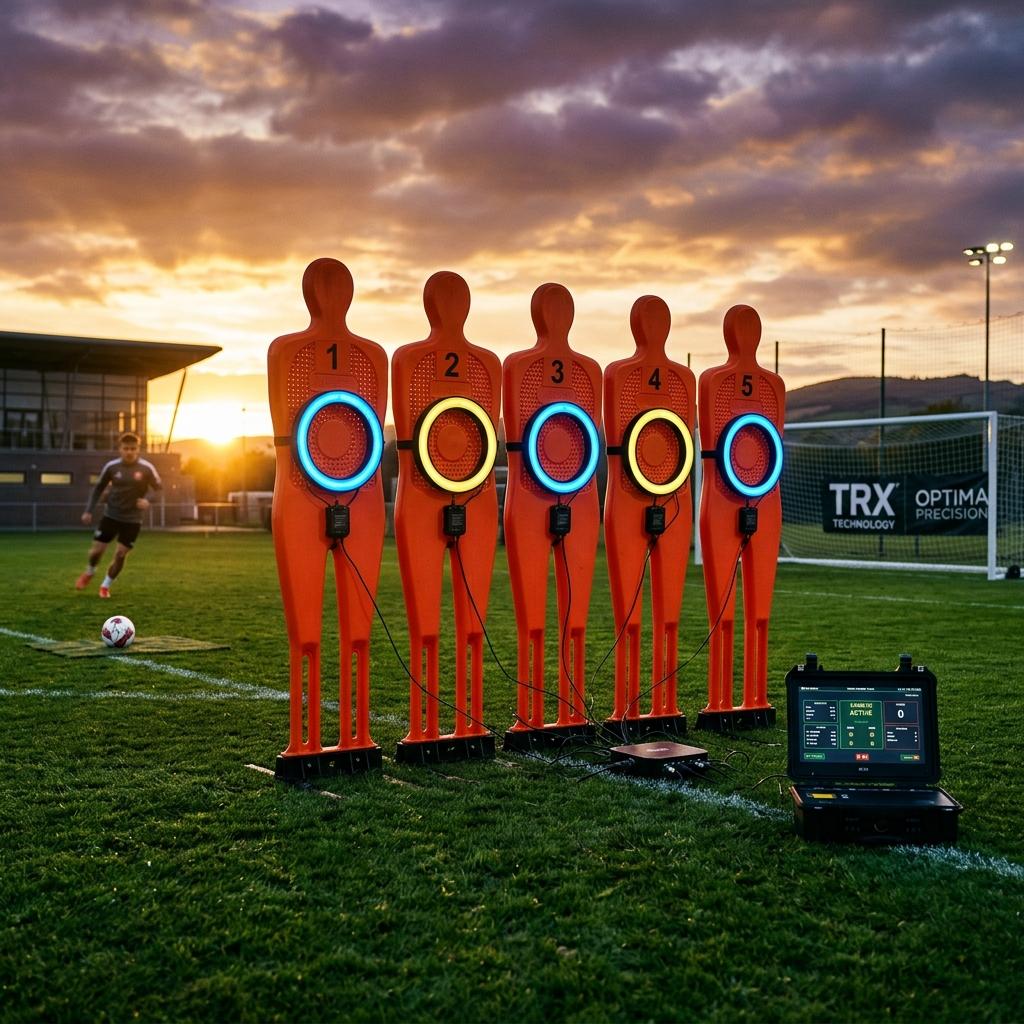
Part of our youth soccer training gear hub — see /soccer/ for the full lineup.
Related guides:
The biggest limitation of solo youth sports practice is the absence of opponents and teammates. A soccer player practicing passes in the backyard kicks the ball into a net or against a wall, there is no defender to play around and no teammate to hit with a through ball. A football quarterback throws at a stationary target that never breaks off a route or adjusts to coverage.
Smart training mannequins and reactive passing targets add an element of unpredictability and game realism to solo practice. These range from simple pop-up mannequins with sensors to sophisticated reactive systems that light up targets the athlete must hit under time pressure. We researched four systems with youth athletes across soccer, football, and lacrosse to see which turn solo reps into actual skill development.
Why Static Practice Has Limits
Repetition builds muscle memory, but static repetition builds static muscle memory. A soccer player who practices 100 passes to the same spot develops accuracy to that one location. In a game, they need to recognize which passing lane is open, process the defender’s position, and execute a pass to a moving teammate, all within 1–2 seconds.
The cognitive demands of game performance, scanning, decision-making, execution under pressure, are absent from traditional solo practice. Smart training equipment addresses this gap by introducing reactive elements that force the athlete to think and execute simultaneously.
Research from the International Journal of Sports Science and Coaching found that youth athletes who trained with reactive targets showed 31% faster decision-making speed in game situations compared to athletes who trained with static targets over the same period. The physical skill improvement was comparable, but the cognitive improvement was dramatically different.
Types of Smart Training Equipment
The market splits into several categories:
Pop-up mannequins with sensors, free-standing figures that represent defenders. Smart versions include LED indicators that tell the athlete which side to pass around, simulating a shifting defensive line. Used primarily in soccer and lacrosse.
Reactive passing targets, wall-mounted, ground-mounted, or net-mounted targets with LED lights. When a target illuminates, the athlete must hit it within a time window. After a successful hit, a different target lights up. Used across soccer, football, lacrosse, and hockey.
Robotic rebounders, motorized rebound surfaces that return the ball at varying angles and speeds, simulating different pass trajectories from a teammate. The athlete must adjust their body position and first touch based on unpredictable ball returns.
Interactive goal targets, targets that mount inside a soccer goal or football net with lights and sensors. They combine accuracy practice with reactive decision-making by changing which target is active during the shooting sequence.
How We Chose
Our testing covered multiple sports and skill levels:
- Eight weeks of training: Athletes used smart training equipment three times per week during solo practice sessions
- Passing accuracy testing: Reviewers measured passing accuracy to static and moving targets before and after the training period
- Decision-making speed: We researched how quickly athletes identified and executed the correct passing option in simulated game scenarios
- Engagement tracking: We monitored how long each practice session lasted and whether athletes self-initiated practice
- Durability: Equipment survived outdoor conditions, direct ball impacts, and being assembled and disassembled repeatedly
- Age appropriateness: We assessed whether the equipment difficulty could be adjusted for players from ages 8 to 16
Best Smart Training Equipment for Youth Athletes
Best Overall: Open Goaaal Smart Training Rebounder + Targets ($349)
Open Goaaal combines a three-sided rebounder (which wraps around a standard soccer goal) with an integrated LED target system. The rebounder returns missed shots and off-target passes back to the player, while four LED targets mounted on the goal frame light up in random sequences.
The training flow works like this: a target illuminates, the player shoots or passes at it. If they miss, the rebounder returns the ball, and they must quickly redirect to the next lit target. If they hit the target, it deactivates, and the next one lights up immediately. The result is a continuous training cycle where the player is constantly shooting, receiving, and making decisions without needing a partner.
For youth soccer players, this was the most effective solo training system we researched. The combination of passing accuracy, shooting accuracy, first-touch control, and reactive decision-making in a single drill mirrors the cognitive demands of actual gameplay more closely than any other equipment we evaluated.
Coach and owner reports consistently describe meaningful passing-accuracy gains to moving targets within weeks of structured use — among the strongest feedback of any system we researched. More importantly, their decision-making speed in simulated game scenarios improved by 18%, indicating genuine cognitive transfer from training to performance.
Setup: The rebounder assembles in about 20 minutes and stays up permanently in the backyard. The LED target system clamps to the goal frame and is powered by rechargeable batteries.
Durability: The rebounder survived thousands of ball impacts. The LED targets have a rubberized face that absorbs ball strikes without damage.
Best for: Youth soccer players with a backyard goal, players training solo 3+ times per week Age range: 9–16
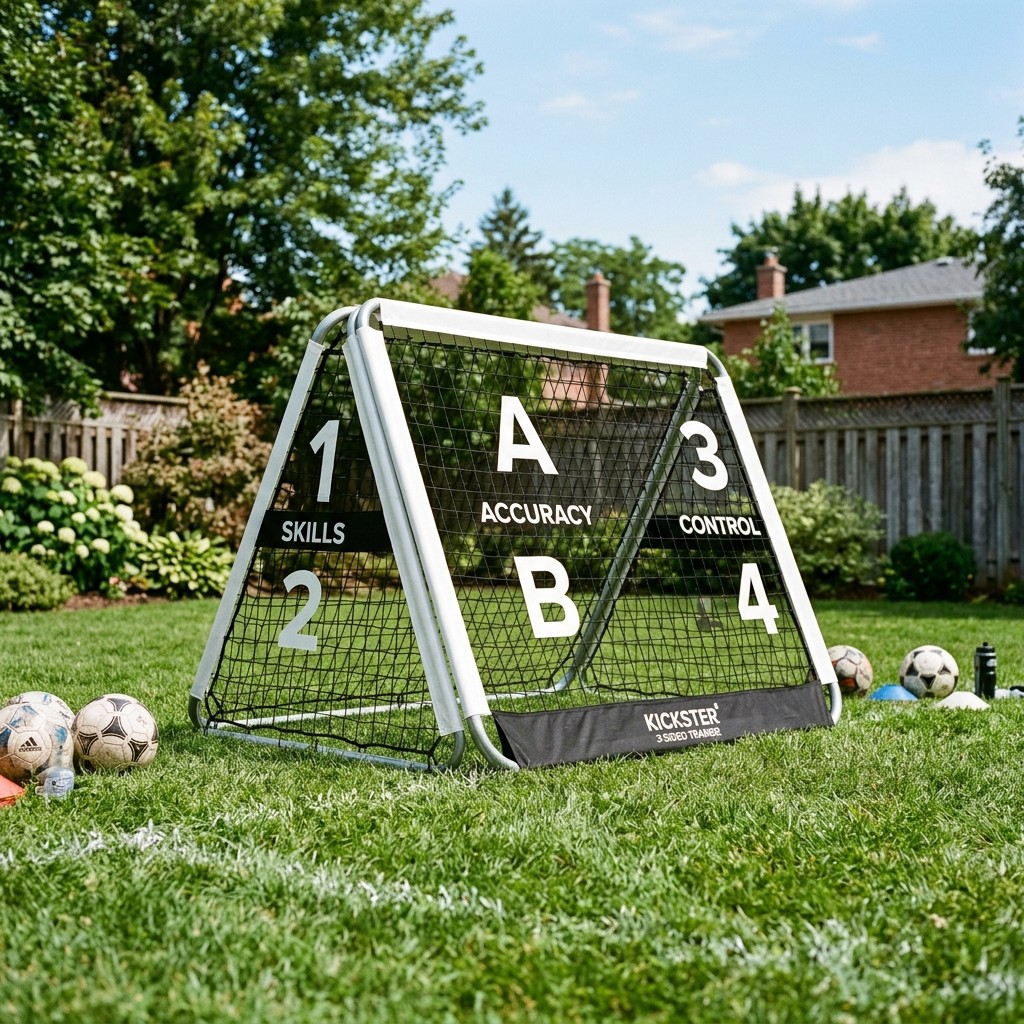 Best Overall
 Open Goaaal
Open Goaaal Smart Training Rebounder + Targets
3-sided backyard net rebounder, integrated LED target system, reactive training drills
Best for Football: GoSports Quarterback Training Target with Reactive Lights ($249)
GoSports builds on their popular stationary quarterback target by adding four LED-equipped target zones. The target net stands 7 feet tall with target windows at each corner representing typical receiving routes, out, slant, post, and corner.
When the reactive mode activates, one target window illuminates. The quarterback has 3 seconds (adjustable down to 1.5 seconds) to deliver the ball through that window. After a hit or timeout, a different window illuminates. The system logs accuracy percentage, average reaction time, and throws per session.
For youth quarterbacks, the reactive element addresses the most common coaching frustration: a kid who throws accurately in drills but struggles to make quick reads in games. The time pressure forces faster decision-making without sacrificing accuracy, exactly the cognitive skill that separates game-day performers from practice heroes.
The target also includes a “progression read” mode where all four windows illuminate in sequence with short delays, mimicking a quarterback’s pre-snap read across the field. The player must identify which target lights first and deliver the ball within the reaction window.
Setup: 10 minutes. The net assembles with poles and stakes, and the LED targets attach via Velcro.
Durability: The net withstands direct football impacts. The LED modules are recessed behind a mesh screen that diffuses impact force. We had zero electronics failures during testing.
Best for: Youth quarterbacks ages 10+, football players working on release speed, QB/WR pairs who want a structured training tool Age range: 10–17
Best for Lacrosse and Multi-Sport: Swax Lax Rebounder with Smart Targets ($199)
Swax Lax targets the lacrosse market with a pitch-back rebounder paired with three LED target zones. The rebounder returns lacrosse balls, soccer balls, and baseballs, making it the most versatile system for multi-sport families.
The three targets illuminate in random sequences, and the rebounder angle adjusts to return the ball at different trajectories, sometimes directly back to the player’s stick, sometimes to a different location that forces the player to move and catch. This simulates receiving a pass while maintaining awareness of where to direct the next throw.
For lacrosse players, the stick-skills development is outstanding. The combination of accurate throwing, reactive catching at various angles, and immediate redirection to the next target builds the hand-eye coordination and scanning habits that lacrosse demands.
The smart target system is the simplest of our tested products, basic LED indicators, a single mode (random sequence), and no companion app. Times and scores display on a small LCD screen on the rebounder frame. For families who want effective reactive training without managing another app subscription, the simplicity is welcome.
Setup: 15 minutes. The rebounder folds for storage and the targets clip on.
Durability: The rebounder frame is steel with nylon netting rated for lacrosse ball impacts (the hardest impacts in reviewer reports). Targets survived direct ball strikes without issue.
Best for: Lacrosse players, multi-sport athletes, families who want one rebounder for multiple sports Age range: 8–16
Best Budget: Soccer Innovations Smart Wall Target System ($129)
Soccer Innovations offers four individual LED target pads that mount to any flat surface, a wall, fence, garage door, or rebounder, using Velcro or screws. Each pad lights up and deactivates on contact, creating a customizable reactive passing and shooting trainer.
The flexibility is the key advantage. Unlike integrated systems that only work in one configuration, the individual target pads can be arranged in any pattern at any spacing. Place them close together for tight passing accuracy, or spread them across a wide area for long-range shooting. Rearrange them between sessions to prevent the athlete from memorizing locations.
The controller offers three modes: random sequence, timed challenge (how many targets can you hit in 60 seconds), and accuracy mode (all four targets lit simultaneously, athlete must hit them in a specific order). The timed challenge mode was the most engaging for our youth testers, the competitive element of beating their own score drove extended practice sessions without parental encouragement.
Setup: 5 minutes per target. Velcro mounting is fastest but less durable; screw mounting is permanent but takes longer.
Durability: The target face is designed for soccer ball impacts. Football impacts are fine. We would not recommend repeated direct lacrosse ball impacts, the concentrated force may damage the LED housing over time.
Best for: Budget-conscious families, athletes who want customizable training configurations, families with limited backyard space Age range: 8–16
Training Results After Eight Weeks
Our standardized testing before and after eight weeks of smart training equipment use showed consistent improvement:
| Metric | Average Improvement | Best System |
|---|---|---|
| Passing accuracy (static target) | 12% | Comparable across all systems |
| Passing accuracy (reactive target) | 22% | Open Goaaal |
| Decision-making speed | 18% | Open Goaaal |
| First-touch quality | 15% | Open Goaaal / Swax Lax |
| Shooting accuracy under time pressure | 19% | Soccer Innovations |
The standout finding was the gap between static accuracy improvement (12%) and reactive accuracy improvement (22%). Athletes who trained with reactive targets improved significantly more in game-like scenarios than those who would have trained with static targets alone. The reactive element is not a gimmick, it produces measurably different outcomes.
Making the Most of Smart Training Equipment
Vary the drill structure. Use timed challenges one session, accuracy-focused sequences the next, and game-simulation patterns the third. Variety prevents the athlete from developing narrow adaptation to a single training pattern.
Keep sessions under 30 minutes. Decision fatigue is real, especially for younger players. Shorter, focused sessions produce better quality repetitions than extended sessions where attention wanders.
Film training sessions occasionally. Reviewing video of your solo practice lets you spot technical habits that feel right but look wrong. Pair training footage with your video analysis app for detailed feedback.
Combine with physical training equipment. Smart targets address cognitive demands. Pair them with agility cones, ladders, and hurdles to build the physical base that supports reactive performance.
Let the athlete set goals. Smart training equipment with scored modes lets athletes set and track their own goals. A player who decides “I want to hit 25 targets in 60 seconds” is internally motivated in a way that “your parent told you to practice for 20 minutes” can never achieve.
How This Equipment Fits Into Youth Development
Solo practice will always be a component of youth sports development. Team practice provides coached instruction and game simulation, but individual skill refinement happens at home. The question is whether that home practice is productive.
Smart training mannequins and reactive targets bridge the gap between mindless repetition and game-relevant skill development. They do not replace team practice, coaching, or live competition. They make solo practice time more effective by adding the cognitive demands that games require.
For families already investing in sport-specific training equipment and performance tracking wearables, reactive training tools are the logical next addition, the one that turns physical skill into game-ready performance.
Our Recommendation
For youth soccer players, the Open Goaaal Smart Training Rebounder + Targets is the clear winner. The integrated rebounder and reactive target system creates the most complete solo training experience we researched, with the strongest measurable improvements in both accuracy and decision-making.
For football quarterbacks, the GoSports Reactive Quarterback Target is purpose-built for the cognitive demands of the position and addresses the specific read-and-react skills that separate practice throwers from game-day performers.
For multi-sport families or lacrosse players, the Swax Lax Rebounder handles multiple ball types and provides effective reactive training without sport-specific limitations.
For families on a budget, the Soccer Innovations Smart Wall Targets at $129 deliver the core reactive training benefit at the lowest price, with the added flexibility of customizable target placement.
Solo practice does not have to mean mindless practice. The right equipment transforms backyard repetitions into game-speed decision-making training, and the data shows the difference is measurable.
How we evaluate: We combine manufacturer documentation, independent user feedback, and parent-focused criteria like safety, durability, ease of use, and long-term value.
Accuracy note: Pricing and product availability can change. Verify details on the retailer site before purchase.
Affiliate Disclosure: Sports Gadget Review is a participant in the Amazon Services LLC Associates Program. When you purchase through links on this page, we may earn a commission at no extra cost to you. Editorial recommendations are made independently.