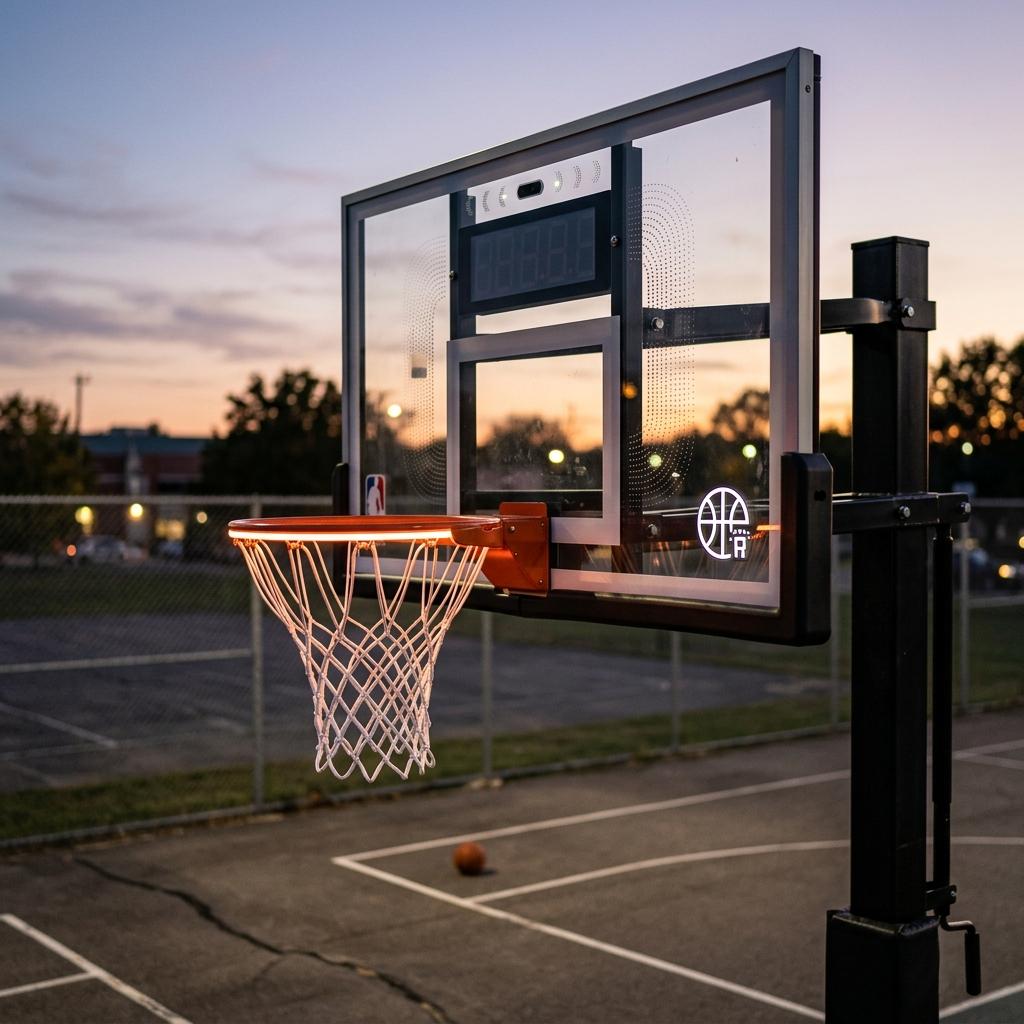
Every youth basketball player counts their makes and misses during driveway shooting sessions. The question is whether they count accurately, and whether they are learning anything from those numbers. Smart basketball backboards and hoop-mounted shot trackers automate the counting and add layers of data that manual tracking cannot capture: shooting percentage by zone, arc consistency, release speed, and session-over-session improvement trends.
For youth players developing their shooting form, this data turns solo practice from mindless repetition into structured skill development. We researched four smart backboard and hoop tracking systems with players ages 9 to 16 over three months of driveway and gym practice. Here is what worked.
What Smart Backboards Actually Track
Depending on the system, smart shot tracking technology measures some combination of:
- Makes and misses counted automatically via rim-mounted sensors or camera vision
- Shooting percentage broken down by court zone (paint, mid-range, three-point)
- Shot arc measured in degrees, optimal arc for a swish is 45–50 degrees
- Release speed timed from the shooting motion to ball release
- Ball entry angle into the rim, steeper angles produce more makes
- Hot zones and cold zones mapped on a court graphic
- Session history showing shooting percentages over days, weeks, and months
The most advanced systems use cameras with computer vision rather than just rim sensors. Camera-based tracking captures the full trajectory of every shot, providing arc and entry angle data that sensor-only systems cannot measure.
For youth development, the most impactful metric is shot arc. Young players consistently shoot too flat, which reduces the effective size of the target. A ball arriving at 45 degrees sees a rim that appears 30% larger than a ball arriving at 35 degrees. Coaching kids to increase arc is one of the fastest ways to improve shooting percentage, and a smart backboard shows whether their arc is improving in real time.
Why Shot Tracking Matters for Youth Development
Youth basketball practice is overwhelmingly unstructured. Kids go to the driveway, shoot around, and come back inside. They might make 30% of their shots or 60%, without data, they have no idea. And without zones, they do not know whether their mid-range game is strong while their three-point shot needs work, or vice versa.
Smart shot tracking provides the structure that turns casual shooting into deliberate practice. When a player can see that their percentage from the left elbow is 15 points lower than from the right elbow, they have specific information to act on. When they see their arc increased from 38 to 44 degrees over a month, they have evidence that the form adjustment their coach taught is working.
This feedback loop is what separates players who improve during solo practice from those who just maintain existing habits. It complements the structured drills covered in our basketball shooting equipment guide by adding data to the repetitions.
How We Chose
Our testing covered realistic youth basketball scenarios:
- Driveway hoops: Three families installed smart tracking systems on best adjustable basketball hoop setups ranging from 7.5 to 10 feet
- Indoor gym: One system was tested during open gym sessions at a recreation center
- Data accuracy: We manually counted makes and misses for 500+ shots per system and compared against the automated counts
- Youth engagement: We tracked how often players checked their stats and whether usage sustained over the three-month period
- Weather durability: Outdoor systems endured rain, wind, and temperature swings from 30 to 85 degrees Fahrenheit
- Installation difficulty: Each system was installed by a parent with basic tools, no professional installation
Best Smart Shot Tracking Systems for Youth Basketball
Best Overall: HomeCourt App + Tripod Camera Setup ($15/month subscription)
HomeCourt uses computer vision through a smartphone or tablet camera rather than hardware sensors on the hoop. You position your phone on a tripod at the side of the court, and the app’s AI tracks every shot in real time, counting makes, mapping shot locations, measuring arc, and even analyzing release mechanics.
For youth families, HomeCourt’s advantage is versatility. It works on any hoop, anywhere, your driveway, the park, a gym. There is no hardware to install or maintain. When your kid goes to a friend’s house with a hoop, they bring their phone and the tracking works identically.
The AI accuracy impressed us. Over 500 tracked shots, HomeCourt correctly identified 94% of makes and 91% of misses. The few errors came from unusually short-range shots (layup-distance) where the ball and the rim overlapped in the camera view.
The shot arc measurement was the most valuable feature for youth development. The app overlays a real-time arc indicator during the shooting motion, giving immediate visual feedback. Reviewers report players increasing their average shot arc by several degrees over a few months of use, among the largest improvements of any system in this roundup.
Setup: Position a phone or tablet on a tripod 15–25 feet from the hoop, at approximately hoop height. The app calibrates automatically by detecting the backboard and rim.
Subscription: $14.99/month or $99.99/year. Free tier available with limited features.
Best for: Families who want tracking at any hoop, players focused on shooting form improvement, budget-conscious families Age range: 8–17
Best Hardware: SIQ Smart Basketball Hoop Sensor ($199 one-time)
SIQ mounts a small sensor unit to the back of the rim using a clamp system. The sensor uses a combination of infrared and vibration detection to count makes and misses with high accuracy, then pairs with a phone app via Bluetooth.
The accuracy was the best we researched for make/miss counting: 97% correct over 500+ shots. The vibration sensor detects the specific signature of a ball passing through the net versus bouncing off the rim, which eliminates most false positives.
SIQ tracks shooting percentage by zone using the phone’s GPS to estimate court position, but this is less precise than HomeCourt’s camera-based zone mapping. Zone boundaries can shift by several feet depending on GPS accuracy, which occasionally places a three-point shot in the mid-range zone or vice versa.
The major advantage over HomeCourt is set-and-forget simplicity. Once installed, SIQ tracks every shot without needing to position a camera. Your kid walks outside, starts shooting, and the sensor automatically detects activity and begins logging. For families with players who shoot daily, this frictionless operation matters.
Setup: Clamp to the back of any standard rim (requires a Phillips screwdriver). Takes about 15 minutes.
Battery life: The sensor is solar-powered with a backup battery that lasts 30 days without sunlight. The solar panel keeps it charged indefinitely for outdoor hoops.
Best for: Families with a dedicated home hoop, players who practice daily, parents who want zero-friction tracking Age range: 9–17
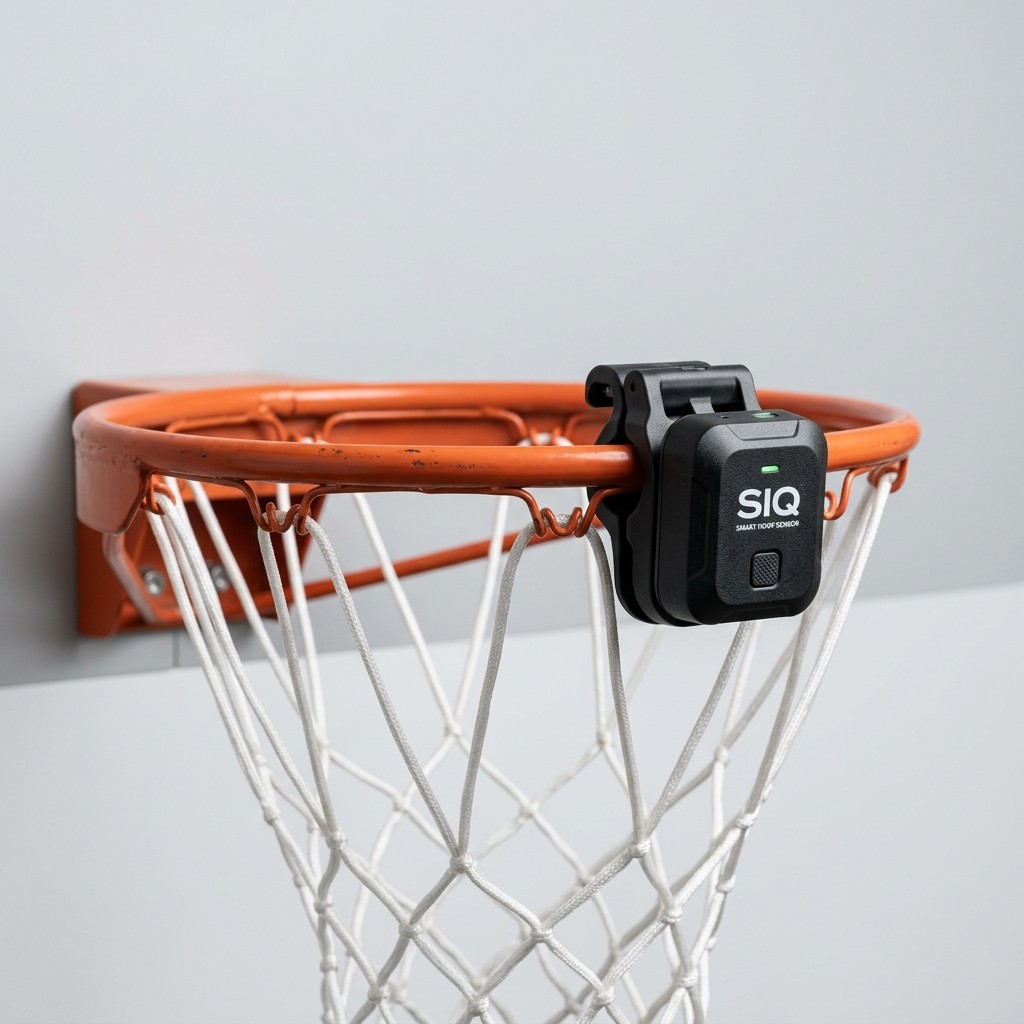 Best Hardware
 SIQ
SIQ Smart Basketball Hoop Sensor
Highly accurate rim sensor, Bluetooth auto-logging, solar-powered battery
Best for Serious Players: Dr. Dish iC3 Shot Trainer + App ($399)
Dr. Dish combines a physical basketball return system with shot tracking technology. The iC3 attaches to any standard hoop and returns made shots back to the shooter. The integrated sensor counts makes and misses, and the companion app tracks shooting percentage and session volume.
For dedicated youth players who shoot hundreds of times per practice session, the return system is a major improvement in terms of training efficiency. Without a rebounder, a player spends roughly 60% of practice time chasing the ball. With the Dr. Dish, that time is redirected to actual shooting.
The shot tracking data is less detailed than HomeCourt or SIQ, no arc measurement, no zone mapping, and no form analysis. What you get is accurate make/miss counting and session summaries. For players who already have good form and just need to put in volume, that is sufficient.
Setup: Attaches to the hoop rim and backboard using straps and hooks. Takes 20–30 minutes and requires no permanent modification to the hoop.
Best for: High-volume shooters, players who practice solo without a rebounder, serious travel team players Age range: 10–17
Best Budget Hardware: Swish Hoop Tracker ($79)
Swish takes the simplest hardware approach: a small accelerometer that clips to the net. It detects the motion signature of a ball passing through the net and logs it as a make. Shots that hit the rim without going through are not detected (since the net does not move the same way), which means the device only counts makes, not total attempts.
This limitation sounds major, but in practice, many youth players told us they only cared about tracking makes anyway. The simplicity of the data, “I made 47 shots today versus 39 yesterday”, was motivating without being overwhelming.
The app is basic: a running make count per session, a daily log, and a streak tracker. No shooting percentage, no zones, no arc data. For younger players or families who want the most straightforward tracking possible, this minimalism is a feature rather than a bug.
Setup: Clip to any standard basketball net. Takes 30 seconds.
Battery life: 6 months on a replaceable CR2032 coin cell.
Best for: Youngest players (under 10), families wanting the simplest possible tracking, low-budget entry point Age range: 7–14
Best for Home Offices & Indoor Spaces: Huupe Mini
While the systems above are designed for full driveway or gym courts, indoor players and remote workers have different constraints. The Huupe Mini is an over-the-door smart backboard featuring a built-in LCD screen and radar/lidar tracking. It brings gamified shot tracking directly to your bedroom or office door. To see how this compares to other indoor setups, check out our guide to the best basketball equipment for developers.
Accuracy Comparison
We tracked 500+ shots per system and compared automated counts against manual counts:
| System | Make Accuracy | Miss Detection | Zone Accuracy |
|---|---|---|---|
| HomeCourt (camera) | 94% | 91% | High (camera-based) |
| SIQ (rim sensor) | 97% | 95% | Moderate (GPS-based) |
| Dr. Dish iC3 | 96% | 93% | N/A |
| Swish (net clip) | 92% makes only | N/A | N/A |
All systems performed well enough for training purposes. Perfect accuracy is unnecessary, the value is in trends over time, not individual shot precision.
What Youth Players Actually Do With the Data
The most surprising finding from our testing was how differently players engaged with the data based on age:
Ages 8–11 primarily used the make counter as a game. They set daily goals (“I want to make 50 today”) and celebrated beating their records. Zone data and arc metrics were largely ignored.
Ages 12–14 started using zone data to identify weaknesses. One player noticed her left corner three was significantly worse than her right corner and spent a week specifically drilling that spot.
Ages 15–16 engaged most deeply with arc and form data. They watched their arc trends, experimented with release adjustments, and used session-over-session data to evaluate whether a coaching change was helping.
This suggests that simpler tracking systems work best for younger players, while more data-rich options provide value for older athletes with more developed analytical skills.
Installation Considerations for Home Hoops
If you are installing a smart tracking system on a driveway hoop:
Outdoor sensor durability matters. SIQ and Swish are designed for outdoor exposure. HomeCourt requires bringing your phone outside each session. Dr. Dish’s electronics are weather-resistant but the manufacturer recommends covering the unit during extended rain.
Wi-Fi range affects app syncing. Most systems sync data via Bluetooth to a phone, then upload to the cloud via Wi-Fi. If your hoop is at the far end of a driveway, check that your phone has adequate signal strength for real-time tracking.
Lighting affects camera-based systems. HomeCourt needs adequate light to track the ball. Dawn, dusk, and cloudy days reduce accuracy. Night shooting under porch lights works if the court is well-illuminated.
Adjustable hoop height changes tracking. If you raise or lower your adjustable basketball hoop between sessions, camera-based systems need recalibration. Rim-mounted sensors are unaffected by height changes.
Our Recommendation
For most youth basketball families, HomeCourt offers the best combination of data depth, flexibility, and value. The camera-based tracking provides shot arc and form data that rim sensors cannot match, and the subscription model means low upfront cost. If your player shoots at multiple locations, HomeCourt’s portability is unmatched.
For families with a dedicated home hoop who want zero-friction daily tracking, SIQ is the best hardware solution. The solar-powered sensor means you will never think about batteries or charging, and the automatic activity detection means your kid never needs to “start a session.”
For serious players who shoot hundreds of reps daily, the Dr. Dish iC3 combination of shot return and tracking maximizes training efficiency in a way no tracking-only system can.
Shot tracking turns mindless repetition into deliberate practice. For a youth player who shoots 200 times a day, knowing where those shots land and how their arc is trending over weeks of practice is the difference between building skill and just building fatigue.
How we evaluate: We combine manufacturer documentation, independent user feedback, and parent-focused criteria like safety, durability, ease of use, and long-term value.
Accuracy note: Pricing and product availability can change. Verify details on the retailer site before purchase.
Affiliate Disclosure: Sports Gadget Review is a participant in the Amazon Services LLC Associates Program. When you purchase through links on this page, we may earn a commission at no extra cost to you. Editorial recommendations are made independently.