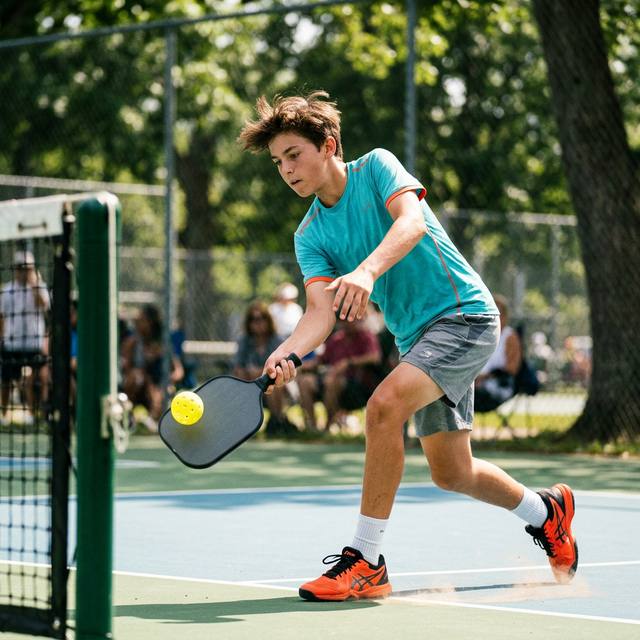
Pickleball grew faster than any other sport in the United States last year, and the youth surge is just getting started. School PE programs are adopting it. Parks are converting tennis courts. And the equipment market finally has kid-specific options that are worth buying.
Here’s what actually matters when buying pickleball gear for young players, and which products deliver real value.
Why Pickleball is Perfect for Young Athletes
Before getting into products, it’s worth understanding why this sport works so well for kids. Pickleball’s smaller court (20×44 feet versus tennis’s 78×27 feet) means less ground to cover, shorter rally distances, and more touches on the ball per point. For kids ages 8–14 especially, this translates directly into faster skill development and more engagement, they’re actually playing, not chasing missed shots.
The sport also rewards precision over power, which levels the playing field between younger and older players in recreational settings. A 10-year-old with good placement can beat a 16-year-old with raw strength. That dynamic keeps kids invested.
Choosing the Right Paddle for Youth Players
Pickleball paddles break into three key variables for youth players:
Weight: Lighter is almost always better for kids. Adult paddles range from 7.5–9 oz. Youth paddles should be 6.5–7.5 oz. Heavier paddles cause elbow fatigue and slower swing speed for developing arms.
Grip size: Most youth players need a 4-inch grip circumference (labeled small or junior grip). An oversized grip reduces control and strains smaller hands during longer rallies.
Core material: Polymer honeycomb cores are the standard for control and durability. Avoid graphite-faced paddles for beginners, they amplify mishits. A fiberglass face gives more forgiveness.
Best Youth Pickleball Paddles
Best Overall: Selkirk SLK Halo Control XL Junior ($89)
Selkirk’s junior SLK Halo is purpose-built for players ages 8–14. At 7.2 oz with a 4-inch grip and T700 carbon fiber face, it offers premium feel without the adult price tag. The elongated shape gives extra reach, helpful for taller juniors covering the non-volley zone line.
Best for: Competitive youth players who practice 2–3× per week
Age range: 10–16
Weight: 7.2 oz
ASIN: Check Amazon for current availability
Best Budget Pick: Niupipo Explorer Junior ($34)
If your child is trying pickleball for the first time, the Niupipo Explorer Junior is the right call. Graphite face, polymer core, 6.8 oz, junior grip, it has all the key specs at roughly one-third the price of premium options. The paddle won’t hold up to daily abuse for a year, but it’s perfect for rec play and “let’s see if they like this” situations.
Best for: Beginners, casual play, first-time buyers
Age range: 7–13
Weight: 6.8 oz
Best for Smaller Kids: Gamma Sports Beginner Paddle Set ($49)
Gamma’s beginner set comes with two paddles, four pickleballs, and a carrying bag. For families who want to play together without investing in multiple separate purchases, this set makes sense. The paddles are 7.0 oz with 4-inch junior grips. They won’t last serious players more than a season, but for family backyard use, the value is hard to beat.
Best for: Family play, dual-parent setups, backyard use
Age range: 8–14
Best for Teens (High Performance): Head Radical Pro Junior ($79)
Head’s pickleball entry uses a composite carbon touch surface with dynamic foam injection around the edge guard. At 7.4 oz, it’s light enough for teen players while offering a level of pop and spin that serious competitors will appreciate. The grip is slightly larger than most junior paddles (4.125 inches), better suited for teens with adult-sized hands.
Best for: Competitive teens, club players, travel teams
Age range: 13–17
Weight: 7.4 oz
Best Pickleballs for Youth Play
Not all pickleballs are equal, and the wrong ball can hurt development. Here’s the breakdown:
Indoor vs Outdoor: Indoor pickleballs are lighter (around 0.8 oz) with larger holes and softer plastic, better for skill development. Outdoor balls are denser (0.9 oz), harder, and designed to handle wind. Youth programs should use indoor balls unless playing outdoors regularly.
Top picks:
- Onix Pure 2 Indoor (~$12 for 6-pack), Official USA Pickleball approved, soft enough for beginners
- Franklin X-40 Outdoor (~$15 for 6-pack), Tournament-approved, durable, handles wind
Youth Pickleball Training Tools
Ball Machine: Simon Pickleball Teacher ($199)
Simon’s portable ball machine tosses balls at adjustable angles and speeds, letting solo players work on returns without a partner. It holds 30 balls, runs on a rechargeable battery, and fits in the back of a car. For competitive teen players who want to drill between practices, it’s the closest thing to a private coach for return-of-serve repetitions.
Rebounders: GAMMA Sports Pickleball Target ($39)
A portable target rebounder lets players work on placement and forehand/backhand mechanics solo. These attach to any fence or net post and return the ball back to the hitter. Great for warming up and for developing consistent swing mechanics without a partner.
Agility Tools: Speed Ladder + Cones
Pickleball’s demands, quick split-step reactions, lateral movement, controlled forward/backward transitions, are trainable with standard agility ladders and cones. Add a 15-foot ladder and 6 cones to any practice setup. See our agility training equipment guide for specific recommendations.
Setting Up a Home Pickleball Court
You don’t need to convert your driveway for casual play. Portable pickleball nets ($60–$120) work on any flat surface, driveway, basement, gym floor, or cul-de-sac. Here’s what you need:
| Item | Cost | Notes |
|---|---|---|
| Portable net | $60–$120 | USAPA-regulated size is 22 feet wide |
| Court tape/chalk | $8–$15 | Marks boundaries on driveway or gym floor |
| Ball hopper | $20–$40 | Holds 30–50 balls for consistent drilling |
| Ball machine (optional) | $199–$499 | For serious solo training |
Total setup for casual backyard use: under $150.
Tournaments and Competitive Play for Youth
USA Pickleball (USAPA) runs a Junior National Championship and regional tournaments across all age groups, starting at 7-and-under. If your athlete shows competitive interest, search for local USAPA-sanctioned junior tournaments, many areas now have circuits specifically for youth players.
Skill ratings: USAPA uses a 2.0–5.0+ rating system. Most beginners start at 2.0–2.5. Youth competitive players typically reach 3.0–3.5 within one to two seasons with regular practice. Organized tournaments separate age groups and skill ratings, so over-matched matchups are rare.
When to Upgrade Equipment
Start cheap and upgrade when your athlete asks. A kid who asks for better equipment has already decided they want to improve, that’s the signal worth spending on. Typical upgrade path:
- Start: $30–$50 budget paddle + a 6-pack of balls
- After 3–4 months of regular play: $80–$100 mid-tier paddle with proper junior grip sizing
- Competitive play: $120–$200 performance paddle with carbon face
Most youth players don’t need to spend above $100 on a paddle until they’re competing regularly in sanctioned tournaments.
Bottom Line
Pickleball is the easiest youth sport to get started in for under $50, and it scales all the way to competitive national-level play. The right starter setup is simple: Niupipo Explorer Junior paddle, a 6-pack of Onix Pure 2 indoor balls, and a portable net if you want a court at home. From there, let your kid’s enthusiasm drive the investment.
Related Articles
How we evaluate: We combine manufacturer documentation, independent user feedback, and parent-focused criteria like safety, durability, ease of use, and long-term value.
Accuracy note: Pricing and product availability can change. Verify details on the retailer site before purchase.
Affiliate Disclosure: Sports Gadget Review is a participant in the Amazon Services LLC Associates Program. When you purchase through links on this page, we may earn a commission at no extra cost to you. Editorial recommendations are made independently.