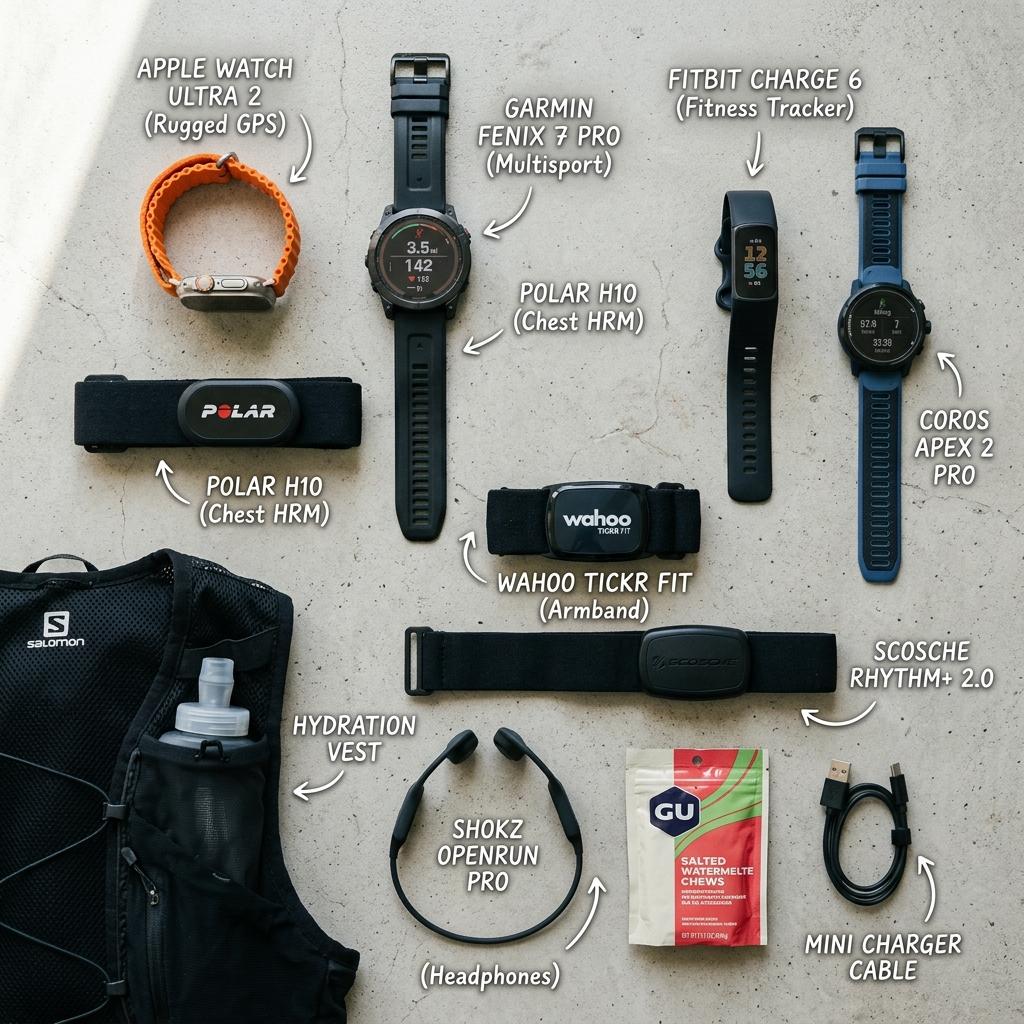
The youth sports gadget aisle is built to look urgent: a GPS watch, a swing sensor, a smart ball, and a rebounder in the same cart. Most of that pile does not get used after week two. This page is the parent and coach filter for what is worth buying in 2026 — and what to skip — without pretending this desk ran a lab or a 30-athlete test fleet.
Sports Gadget Review is a research desk. Picks here come from manufacturer specs, coaching progressions, safety-certification notes, and the complaints that repeat in owner feedback. We do not invent improvement percentages.
This guide is for families who want one honest next purchase, not a garage of unused apps. If you already know the sport, jump to the category page: agility training equipment, youth football training gear, baseball training equipment, or basketball hoop pole pads (safety, not a gadget). Wearable browsing lives on the wearables hub. Product cards live on reviews.
The Rule of One
Before buying any sports tech for your young athlete, apply the Rule of One: one new piece of technology at a time, for one specific measurable goal.
The mistake most sports families make is buying a GPS watch, a swing analyzer, and a heart rate monitor all at once. The athlete ends up overwhelmed, nothing gets used consistently, and the gear collects dust.
Pick one gap in your athlete’s performance. Then buy one device to address it.
What Sports Tech Actually Improves Performance
Three categories keep showing up as useful when a family already has a practice habit. That is parent and coach feedback plus how the tools are designed to work — not a claim that we timed every athlete.
1. Motion Analysis Devices
Swing analyzers, throw trackers, and stride monitors give athletes a number they can chase (bat speed, attack angle, spin). A 12-year-old who can see the swing on video plus one simple metric often understands a coach cue faster than from words alone. The tool does not interpret the swing. Someone still has to name the cue.
Best for: Baseball, golf, tennis, swimming
Budget range: $49–$249
Next read: baseball training equipment before you buy a sensor.
2. GPS and Heart Rate Monitors
For endurance sports — cross-country, swimming, cycling — pace and heart-rate data can turn “run until you are tired” into a repeatable session. The same tools can flag a week that is suddenly much bigger than the last, which is a parent conversation, not a diagnosis.
Best for: Running, cycling, swimming, multi-sport
Budget range: $79–$349
Next read: the existing GPS watches for young athletes overview. If the sport is specifically XC or track, use the youth cross-country and track GPS guide. Browse the category on wearables. The Garmin Forerunner 55 review is the product card for the common youth GPS pick on this site.
3. Return Systems and Training Rebounder Nets
Boring? Yes. Effective? Usually, because they create touches. A rebounder, hitting net, or return chute multiplies solo reps. That is a logistics win, not a magic skill chip.
Best for: Baseball, soccer, basketball, lacrosse, volleyball
Budget range: $49–$599
Next read: baseball training equipment for nets and tees; basketball training equipment for court aids. A return chute is not a pole pad.
Technology That Rarely Justifies the Price
These categories disappoint families for the same reason: the app or the metric is the product, and the athlete stops opening it.
Sleep trackers for under-14s: Kids at this age who are getting appropriate activity and consistent bedtimes usually sleep without a wrist report. The tracker adds a screen at night. Skip it unless a clinician asked for a log.
Smart balls with app integration: The apps are often abandoned within a month. Some sensor balls also change how the ball feels. Stick with a quality ball; add a separate sensor only if someone will read the numbers. The sport-by-sport smart-ball comparison is the smart sports balls review.
Premium GPS watches with social features: In the mid-range GPS aisle, families are usually paying for the case, maps, and brand — not a different kind of pace data. A Forerunner 55-class watch is the youth starting point on this site; see the Forerunner 55 review. Do not treat list prices as locked.
Connected agility lights and “AI” cones: Fun for a team that already runs a warm-up. Not a first buy. Agility training equipment starts with discs and a ladder.
Age-by-Age Buying Guide
Ages 6–9: Movement and Fun
Focus on activity trackers with gamification only if the goal is “move more,” not sport metrics. Fitbit Ace 3 and Garmin Bounce are built as kid trackers; product notes are on the Fitbit Ace 3 review and Garmin Bounce review. Avoid sport-specific sensors. Fundamentals at this age are coach- and parent-driven. Football size still beats a sensor ball — see youth football training gear.
Budget: $30–$75
Ages 10–13: Sport-Specific Skill Development
This is when simple training aids start to earn their keep: a pitching net and tee, a throwing target, a rebounder. A swing analyzer is an add-on after those reps exist, not a substitute. See baseball training equipment and agility training equipment.
Budget: $80–$200
Ages 14–17: Serious Performance Tracking
Teen athletes on travel or varsity schedules can use GPS, heart-rate, and recovery tools if someone will actually read the week. The investment only makes sense if the athlete is already training most days. A driveway hoop at this age still needs a pole pad if the post is bare steel.
Budget: $150–$400
How to Evaluate Any Youth Sports Tech Purchase
Ask these four questions before purchasing:
- Is there a specific, measurable problem this solves? (“Get faster” is not measurable. “Improve 40-yard dash from 5.4 to 5.2 seconds” is measurable.)
- Will my athlete use this without being reminded? If the answer is no, skip it.
- Does this replicate something a quality coach would tell them? Good tech turns coaching insights into data athletes can self-monitor.
- What’s the cost per use over the sport season? A $200 device used twice per week for 20 weeks is cheap per use. A $50 device used twice is not.
When to skip the gadget (parent vs coach)
Skip the gadget if the athlete will not use it without a reminder, if the league already supplies the tool (a team GPS vest, a school radar gun, a club Jugs), or if the “gap” is actually sleep, showing up to practice, or a ball that is the wrong size.
Parents should buy for one athlete and one habit: a net, a target, a pad, or a watch — not all four. Coaches should buy shared stations (cones, a target, a machine the roster can rotate through) and refuse per-player sensors unless a staffer will review the export.
Football catching gloves and receiver nets are not on this page — they live on football receiver training equipment. Football home-practice overview is youth football training gear. Hubs: football, basketball, baseball, training aids.
Our Top Picks by Category
Use the category guide, then the product review if you already know the SKU:
- GPS Watches for Young Athletes
- Youth XC and track GPS watches
- Basketball Training Equipment
- Basketball hoop pole pads
- Baseball training equipment
- Baseball Radar Guns & Bat Sensors
- Agility Training Equipment
- Youth football training gear
- Soccer Training Technology
- Swim Training Gadgets
- Youth Sports Budget Guide: How Much Should You Spend?
- Wearables hub · Reviews
The youth sports technology market is flooded with impressive-looking gear, most of which sits unused after two weeks. The families who get value buy deliberately, start with the lowest-tech solution that solves the problem, and only upgrade when use is already consistent. Quality reps beat expensive metrics every time.
How we evaluate: We combine manufacturer documentation, independent user feedback, and parent-focused criteria like safety, durability, ease of use, and long-term value.
Accuracy note: Pricing and product availability can change. Verify details on the retailer site before purchase.
Affiliate Disclosure: Sports Gadget Review is a participant in the Amazon Services LLC Associates Program. When you purchase through links on this page, we may earn a commission at no extra cost to you. Editorial recommendations are made independently.