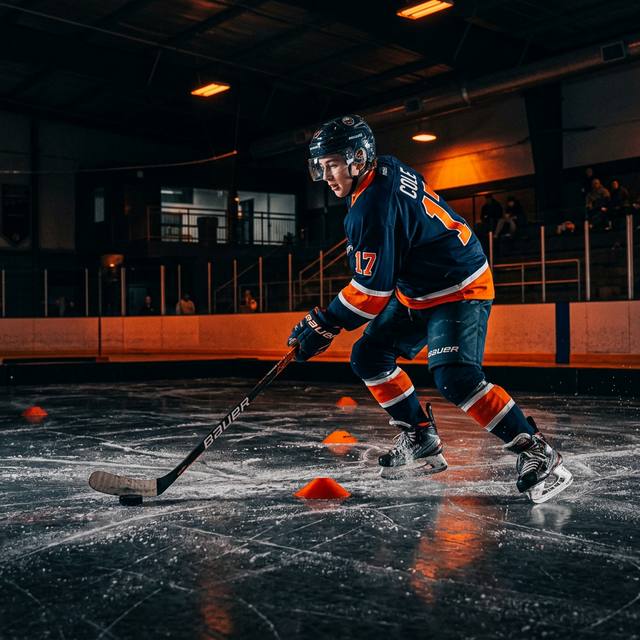
Ice hockey is one of the fastest, most physical sports young athletes can play. A puck traveling 70+ mph, boards on every side, hard ice underfoot, and opponents moving at sprint speed, the safety gear isn’t optional. Getting it wrong doesn’t just hurt performance. It causes real, lasting injury.
This guide covers everything youth hockey parents need to know about helmets, padding, and the emerging category of concussion monitoring technology.
Helmet Standards: What the Certifications Actually Mean
Before spending any money on a youth hockey helmet, understand the two certification bodies that matter:
HECC (Hockey Equipment Certification Council): Certifies that helmets meet minimum performance standards for ice hockey. All helmets used in sanctioned youth hockey leagues must be HECC certified. This is the baseline, not the ceiling.
STAR Rating System (Virginia Tech Helmet Lab): The most comprehensive independent testing available. Unlike HECC, which tests for pass/fail, Virginia Tech’s STAR system scores helmets on a 1–5 scale based on their ability to reduce both concussion risk and linear head acceleration across multiple impact scenarios. A 5-star helmet is meaningfully safer than a 2-star HECC-certified helmet even if both are “legal” for play. Always check the Virginia Tech ratings at helmet.beam.vt.edu before purchasing.
Best Youth Hockey Helmets
Best Overall: Bauer RE-AKT 200 ($189)
The RE-AKT 200 consistently earns top marks in Virginia Tech’s independent testing and is the most protective helmet in Bauer’s consumer-accessible lineup. The SUSPEND-TECH liner system suspends the inner shell away from the outer shell, creating a two-stage impact absorption system that outperforms standard foam-only designs in rotational force testing.
The fit system uses a dial adjuster at the rear for precise sizing. This matters: an improperly fitted helmet is significantly less effective than a properly fitted lower-tier helmet.
Best for: Competitive youth players, travel teams, high-contact levels
Age range: 8–adult (sized by head circumference, not age)
Certification: HECC + CSA certified
Best Budget: CCM Tacks 70 ($79)
For recreational players or children in their first season trying the sport, the CCM Tacks 70 provides solid HECC-certified protection at a price that makes sense before you know whether your child will stick with hockey. The comfort liner is adequate, the fit system works, and the shell is appropriately rigid.
Upgrade note: If your child plays competitive hockey, invest in the RE-AKT 200. The Tacks 70 is appropriate for learn-to-skate and recreational house leagues only.
Best for: Beginners, first-year players, house league recreational use
Age range: Youth and junior sizing available
Best for Elite Youth Players: Bauer RE-AKT 150 Pro ($249)
Players competing at AAA or high-level AA programs deserve the best available protection. The RE-AKT 150 Pro adds a PORON XRD foam layer to the RE-AKT’s suspension system, this open-cell foam stiffens upon impact, providing additional energy absorption during high-velocity collisions. Virginia Tech 5-star rated.
Best for: Elite travel team players, highest-contact levels
Age range: Junior and senior sizing (teenagers)
Helmet Fit: The Most Important Safety Factor
A poorly fitted helmet is more dangerous than a well-fitted budget helmet. Measure your child’s head circumference at the widest point (above the eyebrows, around the rear of the skull) and match to the manufacturer’s size chart.
Proper fit checklist:
- Helmet sits level on the head, not tilted back or forward
- Two finger-widths of clearance above the eyebrows
- Helmet doesn’t shift when pushed from the front or back
- No pressure points after 20 minutes of wear
- Cage or visor is properly attached with no wobble
Recheck fit at the start of each season. A helmet that fit in October may not fit the following September.
Facial Protection: Cage vs. Visor
Full cage (required for players under 18 in most US youth leagues): Wire cage that protects the full face. Mandated for safety at youth levels and recommended for all players not legally required to wear it. Zero trade-off in warmup.
Half visor / straight bar: Worn by many adult and junior (16–20) players. Protects eyes from high pucks and sticks but leaves the lower face exposed. Not appropriate for players under 16.
Certified cages: Look for CSA-certified (Canada) or HECC-certified cages. Non-certified decorative cages sometimes sold online provide no meaningful protection.
Shoulder and Elbow Pads
Shoulder pads in hockey serve dual purpose: absorbing board impacts and falls, and protecting the collarbone and shoulder joint. Undersized or worn-out shoulder pads are a leading cause of shoulder separations in youth hockey.
Fitting rule: Shoulder caps should align with the actual shoulder joint. Pads too large slide down; pads too small leave the shoulder joint unprotected.
Recommended picks:
- Bauer S18 RE-AKT Shoulder Pads (~$89), Multi-density foam construction with anatomical fit. Good protection at a mid-range price
- CCM Super Tacks AS1 (~$129), Higher-end option with D30 foam in key impact zones. Better for competitive players taking heavier contact
Elbow pads should cover the full elbow joint and the lower third of the forearm above the glove line. Many youth players wear undersized elbow pads that leave a gap, this gap is where many elbow injuries occur.
Shin Pads and Pants (Breezers)
Shin pads protect against puck impacts, stick contact, and falls. They should cover from above the knee to the top of the skate boot with no gaps.
Fitting rule: Stand in skates. Shin pad top should reach the bottom of the kneecap. Straps should hold the pad in place through full skating range of motion.
Pants/breezers: Protect the hips, thigh, tailbone, and kidney region. Children outgrow pants faster than any other equipment. Buy with one size of growth room, but not more, oversized pants shift during play.
Concussion Monitoring Technology for Youth Hockey
This category has matured significantly over the past five years. Two approaches are worth knowing:
In-Helmet Impact Sensors
Prevent Biometrics Guardian Cap / G-Force Tracker ($149–$249 system): Impact sensors attach inside the helmet and transmit head acceleration data wirelessly to a sideline tablet. Coaches and athletic trainers receive real-time alerts when an impact exceeds a set threshold. This doesn’t diagnose concussions, it identifies impacts significant enough to require sideline evaluation.
Multiple youth hockey associations at the triple-A level now require or recommend these systems as standard. For house league parents, a sideline sensor system provides peace of mind and objective data when a hit looks concerning.
Riddell InSite Impact Response ($99 sensor + compatible helmet): Works with specific Riddell helmets (primarily football-design, adapted for multi-sport) to transmit head impact data. Most practical for programs already using Riddell equipment.
Wearable Concussion Sensors
Prevent Biometrics Fit Guard ($249): Worn as a mouthguard that contains an accelerometer. Measures head acceleration via the jaw (which transmits forces accurately from head impacts) and sends data wirelessly. Doesn’t require helmet modification. For youth hockey players whose parents want monitoring without hardware inside the helmet, the mouthguard form factor works well.
What These Sensors Cannot Do
Impact sensors do not diagnose concussions. They identify impacts that may warrant evaluation. Concussion diagnosis requires symptom assessment by a qualified medical professional, no sensor changes that. Parents who receive a high-impact alert should follow their league’s return-to-play protocol and consult their child’s physician, regardless of whether their child appears symptomatic immediately following the hit.
Equipment Maintenance and Replacement Schedule
Helmet: Replace every 10 years maximum (many manufacturers recommend 5–7 years). Replace immediately after any significant impact. HECC certifications expire, check the certification sticker inside the helmet for the expiration date.
Shoulder pads and shin guards: Replace when padding compresses and doesn’t return to shape, when shells crack, or when your athlete outgrows the sizing. Inspect at the start of each season.
Skates: Sharpen every 8–12 hours of ice time. Properly sharpened blades reduce ankle turnover risk from edge loss. Skates should be replaced when the boot can no longer provide lateral ankle support, typically when the upper boot breaks down from the inside.
Building a Complete Youth Hockey Safety Setup
| Item | Recommended Pick | Price |
|---|---|---|
| Helmet + cage | Bauer RE-AKT 200 + CSA cage | ~$230 |
| Shoulder pads | Bauer S18 RE-AKT | ~$89 |
| Elbow pads | CCM Tacks 70 | ~$45 |
| Gloves | Bauer Supreme 3S | ~$79 |
| Shin guards | CCM Jetspeed FT4 | ~$69 |
| Pants/Breezers | Bauer Supreme 3S Pro | ~$89 |
| Impact sensor (optional) | Prevent Biometrics head sensor | ~$179 |
| Total protection setup | ~$780 |
Budget-conscious full setup using entry-level CCM equipment: ~$450–$550.
Bottom Line
Youth hockey safety gear is not a place to optimize for savings over protection. The speed of the game, the hardness of the ice, and the presence of boards create an injury risk profile unlike any other youth sport. Virginia Tech 5-star helmets, properly fitted shoulder and shin protection, and mandatory cage use for all players under 18 are worth every dollar.
For parents who want additional peace of mind in high-contact competitive play, sideline impact sensors now provide objective data that coaches and parents can use to make better return-to-play decisions.
Invest in protection first. Performance gear second.
Related Articles
How we evaluate: We combine manufacturer documentation, independent user feedback, and parent-focused criteria like safety, durability, ease of use, and long-term value.
Accuracy note: Pricing and product availability can change. Verify details on the retailer site before purchase.
Affiliate Disclosure: Sports Gadget Review is a participant in the Amazon Services LLC Associates Program. When you purchase through links on this page, we may earn a commission at no extra cost to you. Editorial recommendations are made independently.