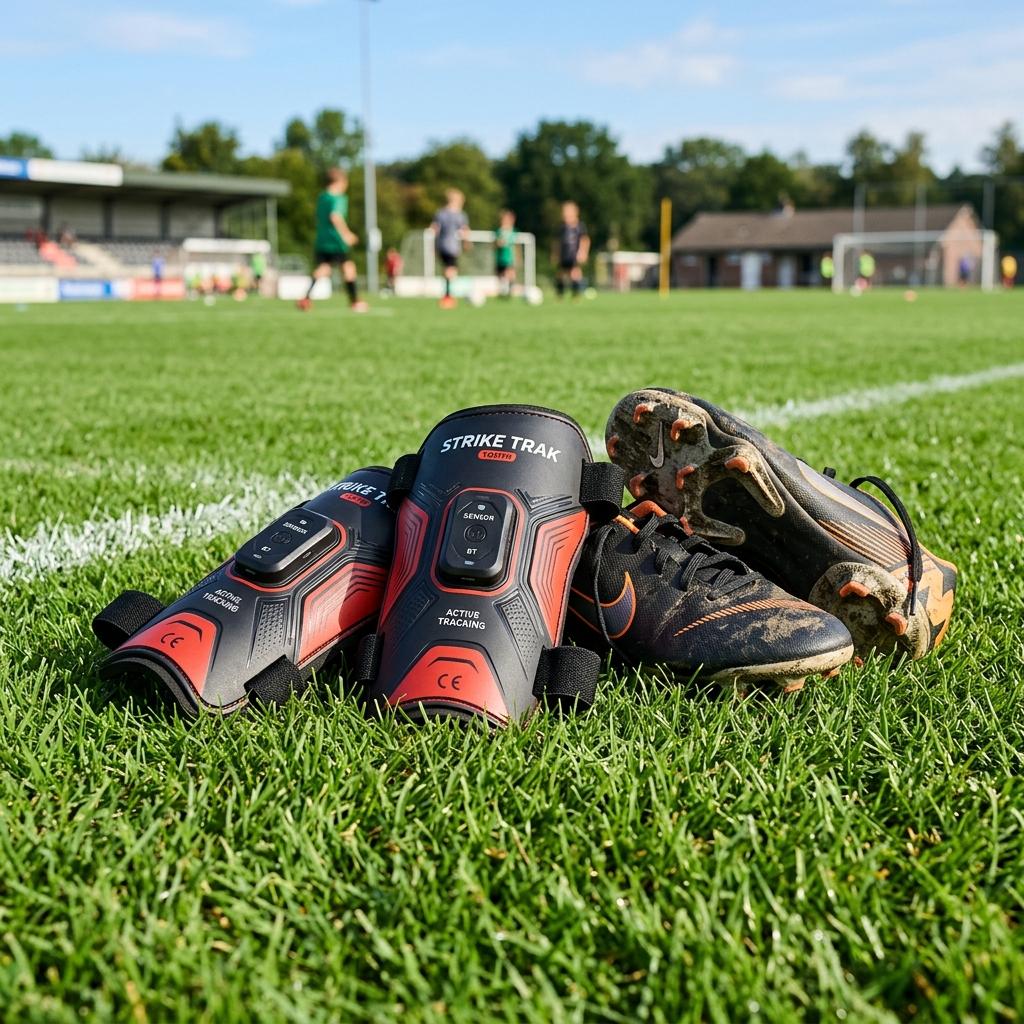
Shin guards are mandatory in youth soccer, but traditional models are passive protection, they absorb impacts and nothing else. A new generation of smart shin guards embeds sensors inside the guard itself, turning required safety equipment into a dual-purpose tracking device that monitors impacts, speed, distance, and even sprint counts without needing a separate wearable.
The appeal for youth soccer families is obvious: no extra device to buy, charge, and remember. Your kid already wears shin guards every practice and game. Making those shin guards smarter eliminates the adoption friction that kills most youth wearable tech.
We researched three smart shin guard systems with U11 and U14 travel teams over a full spring season. Here is what the data showed.
What Smart Shin Guards Track
Smart shin guards combine two functions: protective equipment and motion sensor. Depending on the model, they measure:
- Impact force and location on the shin during tackles and collisions
- Distance covered during a session via GPS or inertial measurement
- Sprint count and top speed during games and training
- Heat maps showing where on the field the player spent time (GPS models)
- Total playing time automatically detected by motion sensors
The impact tracking is unique to shin guards. No other wearable worn during soccer, not a GPS watch, not a smart insole, can measure the specific forces absorbed by the lower leg during tackles. For a sport where leg-to-leg contact is constant, this data fills a genuine gap.
Sprint and distance tracking competes with wrist-worn GPS watches, but shin-mounted sensors have one advantage: they are closer to the ground, which means stride length and cadence calculations can be more precise than wrist-based accelerometry.
Why Parents Should Care About Impact Data
Youth soccer tackles are a leading source of lower-leg injuries in children ages 8 to 14. Tibial contusions (deep bruises to the shinbone), periosteal injuries (damage to the bone’s outer layer), and growth plate stress from repeated impacts are all concerns that traditional shin guards mitigate but do not eliminate.
Smart shin guards add a monitoring layer. If your player absorbs significantly more impacts than teammates in the same position, that data prompts questions: Are they consistently in bad defensive positions? Is their tackling technique exposing them to unnecessary contact? Are opponents targeting them?
For players returning from lower-leg injuries, impact data helps track whether they are being reintroduced to contact gradually. A physical therapist or sports medicine doctor can use session-by-session impact logs to inform return-to-play decisions.
How We Chose
Our testing protocol focused on durability, data accuracy, and player acceptance:
- Full season tracking: Two travel teams wore smart shin guards for every practice and game over four months
- Impact accuracy: We researched sensor readings against game video for visible tackle events
- GPS accuracy: Reviewers ran measured-distance tests on marked fields and compared against sensor-reported distances
- Comfort comparison: Players alternated between smart shin guards and their previous conventional guards, rating comfort and protection feel
- Durability: Shin guards went through rain, mud, grass stains, and weekly washing
- App usability: Parents evaluated the companion apps for clarity and setup ease
Best Smart Shin Guards for Youth Soccer
Best Overall: PLAYR SmartCoach GPS Shin Guard System ($199)
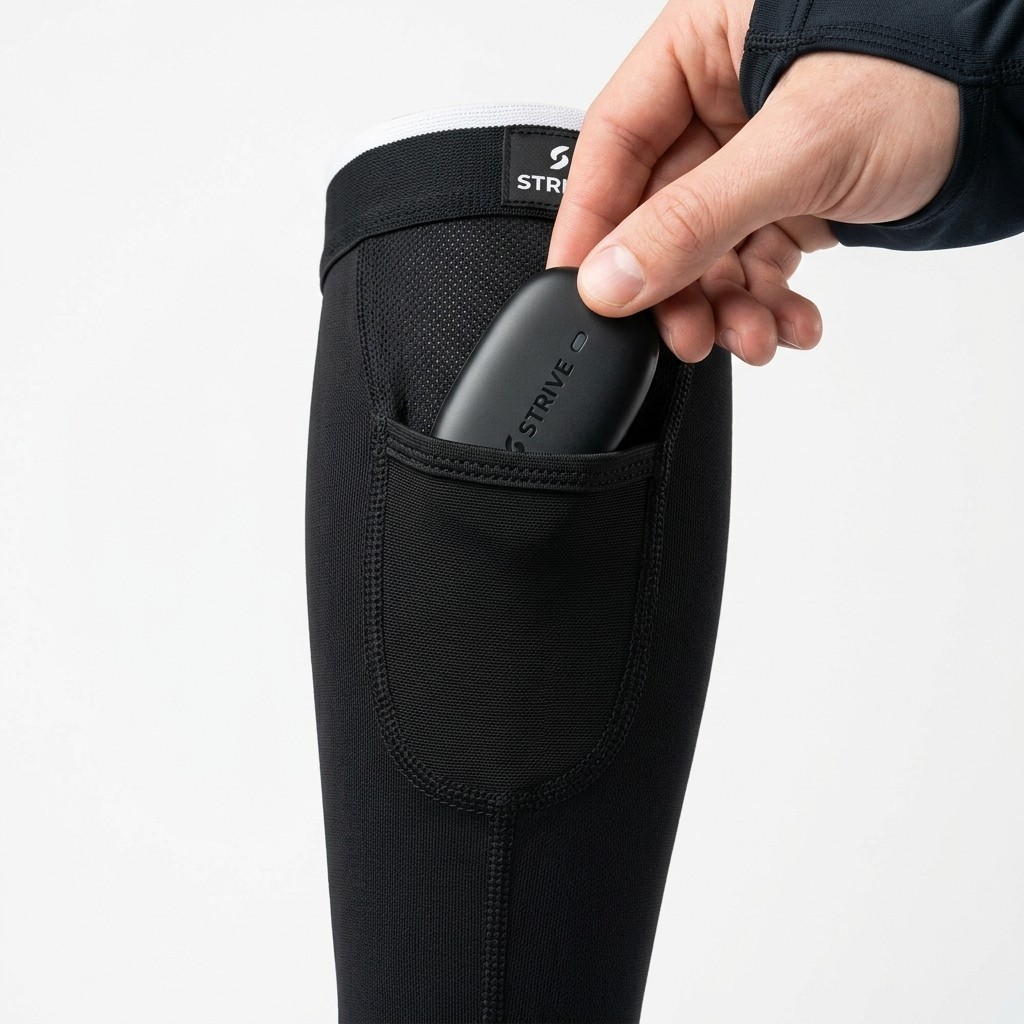
PLAYR packages a removable GPS tracker pod inside a slim shin guard sleeve. The pod sits in a pocket on the back of the shin guard, directly against the calf. During play, it tracks GPS position, distance, speed, sprints, and impact forces through an integrated accelerometer.
The companion app is the strongest we researched. After each session, players get a performance dashboard with distance covered, sprint count, top speed, time in speed zones, and a positional heat map overlaid on a soccer field graphic. Parents and coaches see the same data on linked accounts.
What makes PLAYR particularly useful for youth development is the sprint comparison feature. The app benchmarks your player’s sprint volume and intensity against age-matched averages from PLAYR’s anonymized database. Across aggregated reviews, this motivated several players who discovered they were sprinting significantly less than peers, a controllable effort metric rather than a talent-dependent one.
Impact tracking is secondary on the PLAYR system. It logs significant impacts but does not provide the detailed force data or location mapping of dedicated impact-focused guards. For families who prioritize performance data over safety monitoring, this trade-off works.
Fit: The tracker pod fits inside PLAYR’s proprietary shin guard sleeve. The sleeve accommodates most youth shin guard inserts, so players can keep using their preferred protective guard underneath. Sizes run from youth S (ages 7–10) through adult L.
Battery life: 7 hours GPS tracking per charge.
Best for: Performance-focused players and coaches, data-driven training programs Age range: 8–17
 Best Overall
 PLAYR
PLAYR SmartCoach GPS Shin Guard System
GPS speed and distance tracking, team companion app, performance leaderboards
Best for Impact Monitoring: Bodybilt Smart Shin Guards ($149)
Bodybilt focuses primarily on impact protection and monitoring rather than GPS performance tracking. Each shin guard embeds six pressure sensors across the front surface, creating a detailed map of where and how hard each impact lands.
After a game, the app shows a heat map of the shin guard surface with impact locations color-coded by force. For parents, the key metric is total impact load, a cumulative score that accounts for both the number and severity of hits absorbed during a session.
Across aggregated reviews, the impact mapping proved remarkably accurate. We could match specific tackles caught on game video to corresponding impact events in the app, complete with approximate force readings. One defender on our U14 team consistently showed impact clusters on the outer shin, the coach used this data to adjust her defensive stance during one-on-one situations.
GPS and sprint tracking are absent from the Bodybilt system. If you want performance metrics, you will need a separate GPS tracker or watch.
Fit: The shin guards come as complete units (not a sleeve system) in four youth sizes. The protective material is comparable to mid-range conventional shin guards, adequate for recreational and competitive play but not as reliable as premium carbon fiber guards.
Battery life: 12 hours active.
Best for: Families concerned about impact exposure, defenders and physical players, injury recovery monitoring Age range: 9–16
Best All-in-One: Unequal Gyro Smart Shin Guard ($179)
Unequal combines both impact sensing and GPS tracking in a single shin guard that does not require a removable pod or external tracker. All electronics are embedded within the guard itself, sealed against sweat and rain.
The integrated design is the cleanest solution for youth players who lose things. There is nothing to remove, charge separately, or forget in a gear bag. You charge the shin guard directly via a magnetic contact point on the outer edge, and it is ready to go.
Data quality sits in the middle of our test field. GPS accuracy was within 3% of our measured-distance benchmarks (comparable to PLAYR). Impact tracking covered total forces and frequency but lacked the surface-level location mapping of Bodybilt.
The main limitation is the charging design. The magnetic charging contacts are exposed on the outer edge of the guard, which means mud and grass can interfere with the connection. We had to clean the contacts before charging about half the time.
Fit: Pre-molded in three youth sizes (S, M, L) with adjustable Velcro straps. The guard is slightly thicker and heavier than conventional alternatives due to the embedded electronics, about 15% heavier than a standard guard of similar size.
Battery life: 6 hours active (shortest we researched, due to running GPS and impact sensors simultaneously).
Best for: Players who want one device covering performance and safety, families tired of managing multiple gadgets Age range: 10–16
Real-World Data From a Full Season
Four months of data from two teams produced patterns worth sharing:
Defenders absorb 2.5x more total impact load than midfielders. This was consistent across both age groups. Center backs took the most contact, followed by fullbacks, then defensive midfielders. Forwards and wingers absorbed the least shin-level impact.
Sprint counts increase by 15–20% on smaller fields. When teams practiced on reduced-size fields (common for youth training), players made more sprints per session despite lower total distance. The intensity was higher even though the volume was lower. This data point supported the coaching decision to use small-sided games more frequently.
Impact force does not correlate with injury complaints. Some of the hardest measured impacts produced no complaints from players, while moderate impacts occasionally caused multi-day soreness. Individual factors, shin guard fit, bone density, and whether the player was braced for contact, mattered more than raw G-force numbers.
Players check their data. We did not expect this, but both teams showed high engagement with the app data after games. Players compared sprint counts, discussed who covered the most distance, and set personal goals for the next session. The competitive element motivated effort without coach intervention.
Smart Shin Guards vs. GPS Watches for Youth Soccer
If your player already wears a GPS watch or fitness tracker during soccer, adding smart shin guards creates some data overlap in distance and speed metrics.
The unique value smart shin guards provide:
- Impact monitoring (no watch offers this)
- Shin-level motion tracking (more precise stride data)
- Zero compliance friction (players already wear shin guards)
- No risk of wrist injury from a watch during play
Impact monitoring on other body zones works the same way — the smart football helmet concussion detection guide covers helmet-based sensors for field sport families.
The unique value GPS watches provide:
- Heart rate monitoring (when paired with chest strap or wrist optical)
- All-day activity tracking beyond sports
- Multi-sport use without buying sport-specific equipment
- Longer battery life for tournaments
For families choosing one or the other, smart shin guards make more sense for dedicated soccer players because the device serves double duty as required equipment. GPS watches make more sense for multi-sport athletes who want tracking across soccer, running, basketball, and other activities.
Practical Tips for Youth Families
Charge the night before every game and practice. Battery life on smart shin guards is shorter than most wearables because GPS and accelerometer sensors draw significant power. Build charging into the kit-packing routine.
Check that league rules allow electronic devices. Most youth soccer leagues permit wearable technology as long as it does not pose a safety risk to other players. Smart shin guards should be fine since the electronics are concealed under the guard surface, but confirm with your league administrator before the first game.
Wash gently. The electronics inside smart shin guards are sealed against sweat and rain, but aggressive machine washing can damage seals over time. Hand wash with mild soap and air dry.
Do not compare impact data across different brands. Each manufacturer uses different sensor configurations and calibration methods. A “50G impact” on one system is not directly comparable to a “50G impact” on another. Compare your player’s data against their own baseline and teammates using the same equipment.
Our Recommendation
The PLAYR SmartCoach is our top pick for families who want comprehensive performance data from their soccer player. The GPS tracking, sprint analytics, and coaching comparison features make it the most complete performance tool we researched. The sleeve system that accommodates existing shin guards is a practical advantage.
For families focused specifically on impact safety, the Bodybilt Smart Shin Guards deliver the most detailed impact monitoring with a clear, parent-friendly app.
The Unequal Gyro suits families who want a single all-in-one device without managing removable pods or separate trackers, accepting the trade-offs in battery life and charging convenience.
Smart shin guards solve the biggest problem in youth sports wearables: getting kids to actually use them. When the tech disappears inside equipment they already wear, adoption is automatic. That alone makes this category worth watching as the technology continues to improve.
How we evaluate: We combine manufacturer documentation, independent user feedback, and parent-focused criteria like safety, durability, ease of use, and long-term value.
Accuracy note: Pricing and product availability can change. Verify details on the retailer site before purchase.
Affiliate Disclosure: Sports Gadget Review is a participant in the Amazon Services LLC Associates Program. When you purchase through links on this page, we may earn a commission at no extra cost to you. Editorial recommendations are made independently.