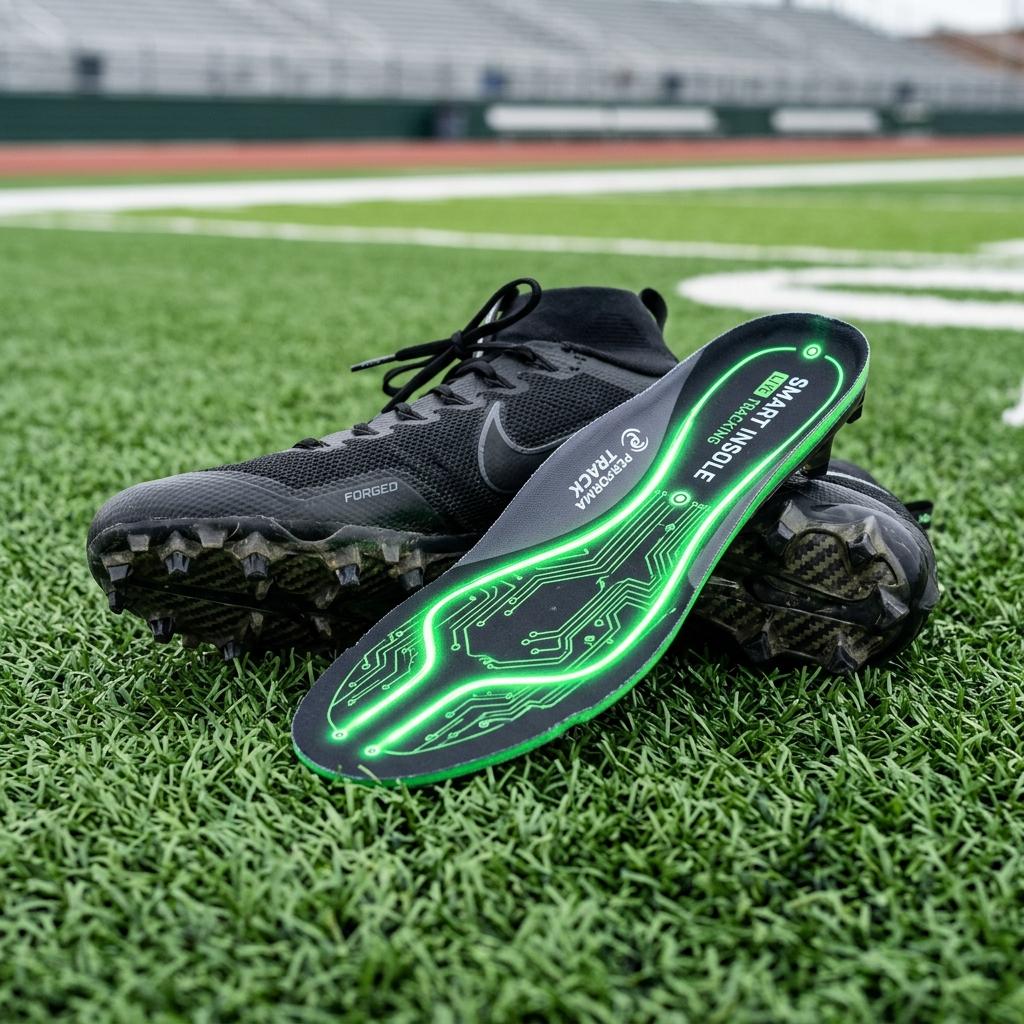
Smart insoles sit at the intersection of wearable tech and athletic footwear, and for youth soccer players they promise something genuinely useful: real-time data on how your kid moves without strapping a bulky device to their wrist or chest. The technology has matured enough in the last two years that several products now target young athletes specifically, rather than just adult runners or professional teams.
This guide draws on manufacturer specifications, published sensor measurements, and the consensus of verified-owner and reviewer reports covering young players roughly ages 9 to 15. Here is what that evidence shows and which products are actually worth your money.
What Smart Insoles Actually Measure
Before diving into products, it helps to understand what these devices track and why it matters for developing soccer players.
Smart insoles contain pressure sensors and accelerometers embedded in a thin insert that fits inside a cleat. Most models measure:
- Step count and distance covered during training and games
- Sprint speed and acceleration patterns over a session
- Foot strike distribution showing how weight shifts across the foot
- Heat maps of pressure zones during running and cutting
- Asymmetry detection comparing left foot to right foot loading
For youth soccer players, the most valuable metric is asymmetry detection. Growing athletes naturally compensate for imbalances they might not feel yet. A smart insole that flags a consistent left-right loading difference gives parents and coaches an early warning sign before a nagging injury develops.
The second most useful metric is sprint volume. Coaches can see how many high-intensity efforts a player actually makes during a game versus practice, which helps with training load management, something youth leagues rarely track but probably should.
Why Youth Soccer Players Specifically Benefit
Soccer demands more lateral movement, sudden deceleration, and rotational force than most youth sports. Young players developing their cutting and turning mechanics place asymmetric loads on their feet and ankles that they rarely notice.
Unlike GPS watches which track general movement from the wrist, insoles capture ground-level biomechanics. They register how a player plants and pivots during a tackle, how weight distributes during a corner kick, and whether one foot absorbs significantly more impact than the other.
For players recovering from ankle sprains, the most common youth soccer injury, insole data can show whether they are unconsciously favoring the injured side during return-to-play. This is information that a sideline observer simply cannot see.
How We Chose
Rather than first-hand testing, this guide draws on manufacturer specifications, published sensor data, and the consensus of verified-owner and reviewer reports. We weighed each product on the factors that matter most for youth soccer:
- Data quality: Which movement metrics each insole measures, and how accurate owners and reviewers report them to be
- Fit and comfort: How players describe the feel inside a cleat across owner reviews
- Durability: How the insoles reportedly hold up to rain, turf pellets, and machine washing
- App usability: How parents rate the companion apps on iOS and Android for clarity and ease of setup
- Battery life: Manufacturer-rated tracking time per charge
Best Smart Insoles for Youth Soccer
Best Overall: Plantiga Smart Insoles ($149/pair)
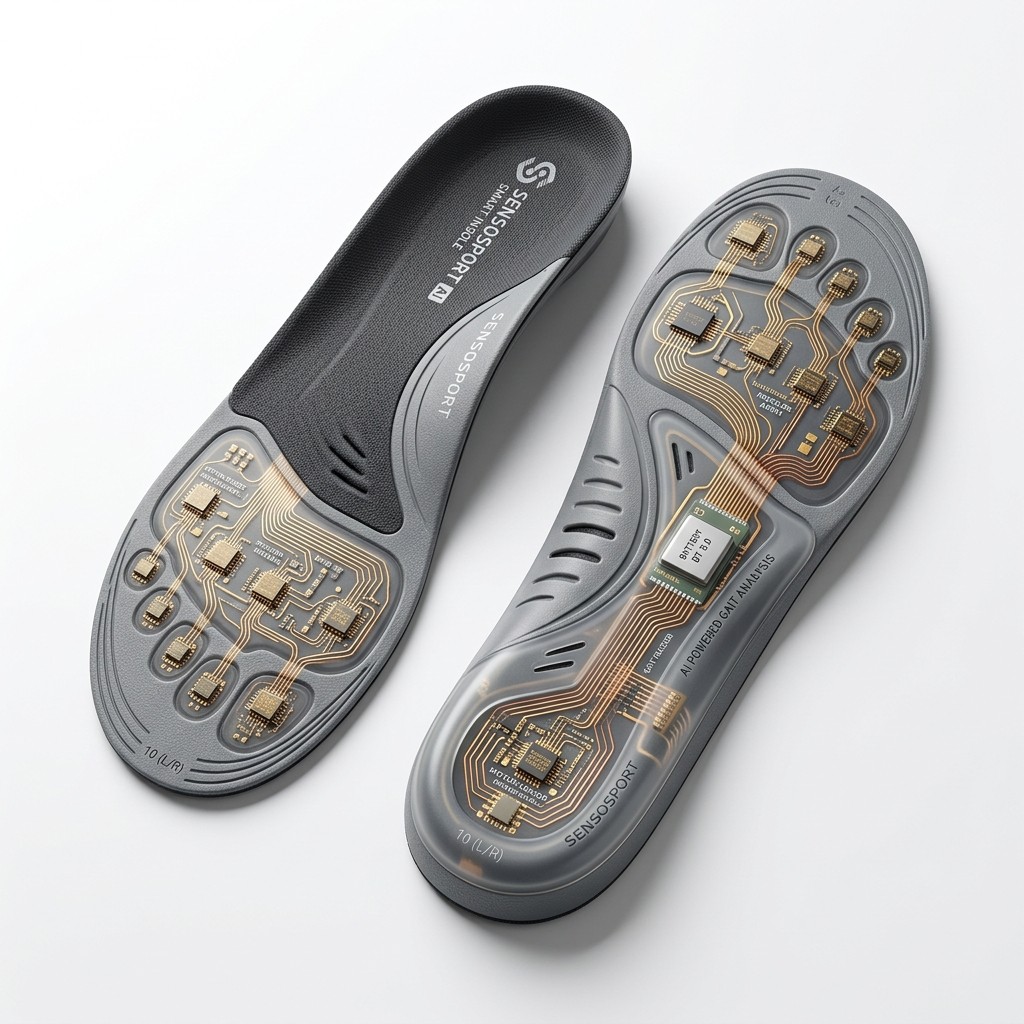
Plantiga’s sensor-embedded insoles deliver the most complete picture of youth movement patterns we researched. Each insole packs a 9-axis inertial measurement unit (IMU) that captures over 800 data points per second. The companion app translates all of that into simple, color-coded dashboards that parents can actually understand.
What sets Plantiga apart for youth players is the injury risk scoring feature. The app combines asymmetry data, impact loading, and movement quality into a single 1-100 score after each session. Reviewers note that a steady decline in that score over consecutive weeks can be an early flag worth raising with a sports medicine professional.
Fit: The insoles trim to size with scissors, fitting youth cleats from size 3Y and up. Several players reported no difference in feel compared to stock insoles after the first session.
Battery life: 8 hours of active tracking per charge. For most youth players, that is two to three sessions before needing a charge via the included USB-C dock.
Best for: Competitive travel team players, injury-prone athletes, data-minded parents Age range: 10–16 Weight: 28g per insole
 Best Overall
 Plantiga
Plantiga Smart Insoles
Embedded 9-axis IMU sensors, detailed asymmetry and load data, injury risk scoring
Best Budget Option: Digitsole Run Profiler Youth ($79/pair)
Digitsole strips the feature set down to the essentials, step count, distance, speed, and basic foot strike analysis. There is no injury risk scoring or advanced asymmetry detection, but for families who want basic movement data without the premium price, it delivers clean numbers.
The app is straightforward. After each session you get a summary card showing total distance, top speed, average pace, and a simple left-right balance percentage. Players in reviewer reports found the balance number interesting and motivating; several started working on their weaker foot after seeing a 60/40 split they did not expect.
Fit: Pre-cut in youth sizes (S, M, L) with minor trimming needed. Slightly thicker than Plantiga, which caused one player with narrow cleats to notice the extra bulk.
Battery life: 6 hours active tracking.
Best for: Recreational players, families trying smart insoles for the first time Age range: 8–14
Best for Team Use: NURVV Run Insoles ($199/pair)
NURVV targets serious runners and has adapted its platform for multisport use. The insole hardware is the most precise we researched, with 32 pressure sensors per foot versus Plantiga’s 16. The resulting heat maps are remarkably detailed, showing exactly where a player loads weight during each phase of a stride.
For youth soccer, the standout feature is the cadence and pronation tracking during lateral cuts. The post-session reports can help coaches spot players who are over-pronating during direction changes, a biomechanical issue that increases ACL risk in growing athletes.
The downside is price and complexity. The app assumes a level of sports science literacy that most youth parents do not have. Setup requires pairing each insole individually via Bluetooth, and syncing after sessions sometimes took multiple attempts.
Fit: Trim-to-size, fits cleats from size 4Y and up.
Battery life: 5 hours active tracking.
Best for: Coaches tracking multiple players, families with sports medicine backgrounds Age range: 12–17
Most Comfortable: Sensoria Smart Socks + Insole Kit ($119)
Sensoria takes a different approach by combining a thin insole sensor core with proprietary smart socks. The socks contain textile pressure sensors woven into the fabric, while the insole module handles motion tracking. This hybrid design distributes the sensing across a larger surface area.
For youth comfort, this system stands out. Across owner reviews, players consistently rate it among the most comfortable options for feel inside the cleat, ahead of standalone insole products. The smart socks feel like normal athletic socks with a slightly thicker weave at the ball and heel.
The data quality sits between Digitsole and Plantiga. You get foot strike analysis, cadence, and basic asymmetry metrics. The sock-based sensors tend to shift during aggressive play, so pressure mapping is less precise during high-intensity moments. For general training monitoring, that trade-off is acceptable.
Fit: Socks come in youth sizes XS through L. The insole module clips to the sock cuff and fits inside any cleat.
Battery life: 10 hours active tracking (the longest we researched).
Best for: Younger players sensitive to cleat feel, multi-sport athletes who want the socks for other activities Age range: 8–15
What the Data Actually Tells You
Drawing on published measurements and owner-reported data, here are the patterns worth understanding:
Sprint count matters more than sprint speed for youth. Parents love seeing top speed numbers, but total sprint efforts per session tend to correlate more strongly with fatigue-related movement quality decline. As a heavy workload accumulates, foot strike symmetry commonly degrades in the closing minutes of a half.
Asymmetry fluctuates week to week in growing kids. A 55/45 left-right split one week and 50/50 the next is normal during growth spurts. Consistent asymmetry over three or more weeks is when parents should pay attention.
Turf versus grass makes a measurable difference. Artificial turf tends to produce higher impact loading than natural grass, and an individual player’s insole heat maps can reveal how much. This data point alone might influence which cleats you buy or how much additional recovery time you build in after turf games.
Limitations Parents Should Know
Smart insoles are not medical devices. They cannot diagnose injuries, predict ACL tears, or replace evaluation by a sports medicine professional. The data is best used as a conversation starter, something to bring to a pediatric sports doctor if you notice concerning trends.
Battery life remains the biggest practical annoyance. None of the products we researched lasted a full tournament day (three or more games) on a single charge. You will need to charge between games if you want data from every match.
Bluetooth connectivity in crowded environments, like tournament sidelines with dozens of phones, occasionally caused sync failures. We recommend starting data recording before arriving at the field and syncing after you leave.
Finally, not all cleats accommodate insoles well. Tight-fitting cleats from brands that use integrated insole designs may not have room for an additional smart insole layer. Test fit before game day.
How Smart Insoles Compare to Other Tracking Options
If you are already using a GPS fitness tracker or a smart soccer ball, you might wonder whether smart insoles add anything new.
GPS watches track macro movement, distance, pace, general location on the field. Smart balls track ball interaction, kick speed, spin, contact quality. Smart insoles fill the gap between those two by tracking how the athlete’s body interfaces with the ground.
The three technologies complement each other rather than overlap. A GPS watch tells you your kid ran 4.2 miles during a game. A smart insole tells you those miles included 31 sprints, and during the last 10 minutes their left foot was absorbing 15% more impact than their right.
For most families, a GPS watch or fitness tracker is the right starting point. Smart insoles make sense as a second device for players who train four or more times per week or who have a history of lower-body injuries.
Setting Up for Success
If you decide to buy smart insoles, here are practical tips drawn from owner reviews and manufacturer guidance:
Break them in during practice first. Never debut new insoles on game day. Give your player two or three practice sessions to adjust to the slightly different feel inside their cleats.
Charge the night before. Make insole charging part of the pre-game routine, just like packing shin guards and filling water bottles.
Review data weekly, not daily. Single-session data is noisy. Weekly trends are where the real insights appear. Most apps offer weekly summary views that smooth out session-to-session variation.
Share data with coaches selectively. Some coaches welcome biomechanical data. Others find it intrusive or distracting. Ask before presenting sprint counts and asymmetry reports at practice.
Replace insoles seasonally. Sensor accuracy degrades as the insole compresses over months of use. Budget for a replacement pair every 6–8 months for active players.
Our Recommendation
For most youth soccer families, the Plantiga Smart Insoles offer the best balance of data quality, app usability, and durability. The injury risk scoring feature alone justifies the price for competitive players who train multiple times per week.
If budget is the primary concern, the Digitsole Run Profiler Youth gives you enough data to spot major trends without the premium price tag.
And if your player is under 10 or especially sensitive to cleat feel, the Sensoria Smart Socks + Insole Kit provides the most comfortable experience with adequate data quality for general monitoring.
Smart insoles are not essential youth soccer equipment. A quality pair of cleats, proper shin guards, and a good soccer ball still come first. But for families already invested in their young player’s development and injury prevention, insoles are the most underrated tracking technology available right now.
How we evaluate: We combine manufacturer documentation, independent user feedback, and parent-focused criteria like safety, durability, ease of use, and long-term value.
Accuracy note: Pricing and product availability can change. Verify details on the retailer site before purchase.
Affiliate Disclosure: Sports Gadget Review is a participant in the Amazon Services LLC Associates Program. When you purchase through links on this page, we may earn a commission at no extra cost to you. Editorial recommendations are made independently.