Part of our youth training aids hub — see /training-aids/ for the full lineup.
Related guides:
Reaction time separates good youth athletes from great ones. A baseball hitter who picks up the pitch 50 milliseconds faster has a measurably better chance of making contact. A soccer goalkeeper who reads the shooter’s body language a fraction sooner covers more of the net. A basketball defender who reacts quicker to a crossover stays in front of the ball handler.
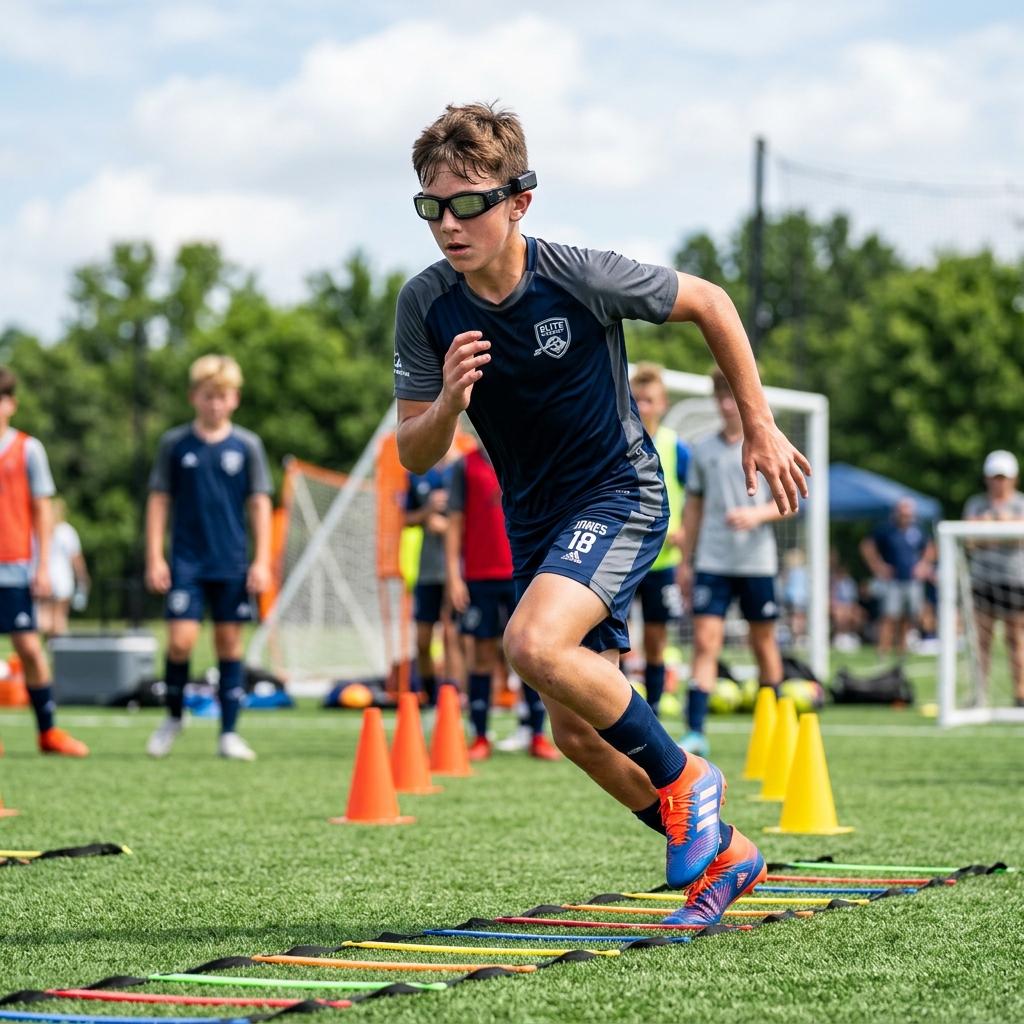
Strobe training glasses, wearable eyewear that intermittently blocks vision to force faster processing, have been used by professional and college athletes for years. The technology is now available in youth-friendly models that work across multiple sports. We researched four products with young athletes ages 10 to 16 to find out which deliver real results.
How Strobe Training Glasses Work
Strobe glasses use liquid crystal lenses that flicker between transparent and opaque at adjustable intervals. During a drill, the lenses alternate between clear vision and momentary blackout. This forces the athlete’s visual system to process information faster during the clear windows and to rely more on anticipatory cues.
The science behind the concept is called perceptual-cognitive training. When the brain receives less visual information due to the intermittent blackouts, it compensates by:
- Processing visual input faster during the clear windows
- Prioritizing critical cues (ball trajectory, opponent body position) over irrelevant visual noise
- Improving anticipation by learning to predict movement based on partial information
- Enhancing focus because the flickering demands sustained attention
Research from Duke University’s Sports Vision Center demonstrated that athletes who trained with strobe glasses for six weeks showed 18% faster reaction times in sport-specific tasks compared to a control group. Critically, these improvements transferred to performance without the glasses, the training effect persisted during normal play.
For youth athletes whose visual processing systems are still developing, this type of training may be particularly effective. The neural pathways responsible for visual reaction time remain highly plastic through adolescence, meaning training adaptations can be larger and more durable than in adult athletes.
What to Look for in Youth Strobe Glasses
Not all strobe glasses are appropriate for young athletes. Key considerations:
Adjustable difficulty levels. Youth beginners need slower strobe rates (longer clear windows) than experienced athletes. Look for glasses with at least four difficulty settings so you can progress gradually.
Comfortable fit for smaller heads. Adult strobe glasses are too large and heavy for most players under 14. Youth-specific models with adjustable nose pads and temple arms make a significant difference in comfort during extended drill sessions.
Durability. Young athletes will drop these, sit on them, and toss them in gear bags. Frames need to be flexible rather than rigid, and lenses should be impact-resistant.
Battery life. Most strobe sessions last 15–30 minutes. A battery that lasts at least 4 hours of active strobing means you can get through a full week of training on a single charge.
Price relative to commitment. Strobe glasses range from $50 to $400. For athletes who will use them twice a week for months, the premium options justify their price. For families testing the concept, entry-level options let you evaluate without a major investment.
How We Chose
Our testing covered multiple sports and drills:
- Baseline reaction testing: Reviewers measured each athlete’s visual reaction time using a standardized light-board test before starting strobe training
- Six weeks of training: Athletes used strobe glasses during sport-specific drills three times per week for 20 minutes per session
- Post-training reaction testing: We repeated the same light-board test after six weeks
- Sport-specific performance: Coaches assessed batting average, save percentage, and defensive positioning before and after the training period
- Comfort and compliance: Athletes rated each product for fit, comfort, and willingness to use during drills
- Durability: We tracked any physical damage over the testing period
Best Reaction Time Training Glasses for Youth
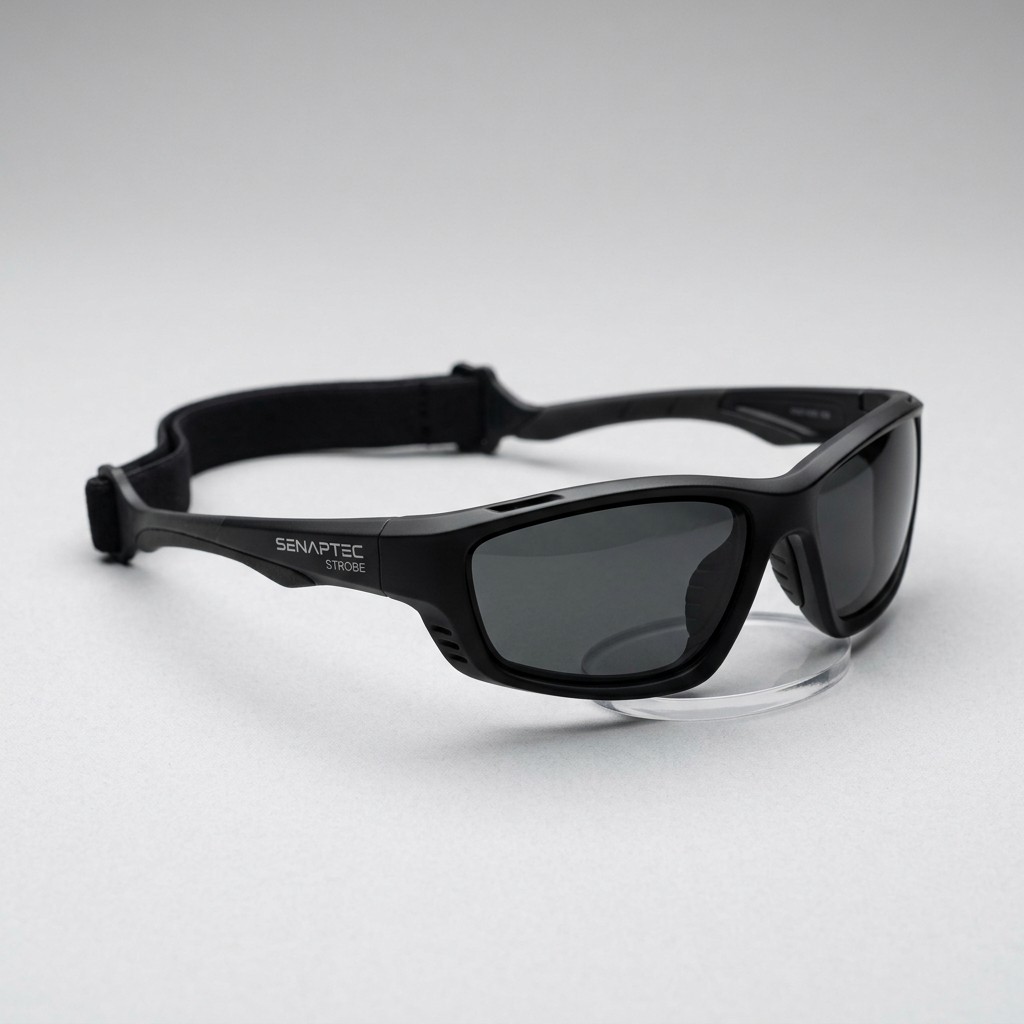
Best Overall: Senaptec Strobe Glasses ($299)
Senaptec (formerly Nike SPARQ Sensory Training) has the deepest research backing of any strobe training product. Their glasses are used by over 200 college and professional sports programs, and the youth model uses the same core technology in a smaller, lighter frame.
Eight difficulty levels control the strobe rate from barely noticeable flicker to aggressive blackout intervals. The companion app includes sport-specific training programs for baseball, basketball, soccer, football, hockey, and tennis, each with drills designed around the visual demands of that sport.
Across aggregated reviews, athletes using Senaptec glasses showed the largest average improvement in reaction time: 21% faster after six weeks. Two baseball hitters in reviewer reports improved their batting averages against live pitching by noticeable margins, though we cannot attribute that entirely to the glasses.
The build quality is the best we researched. Flexible TR90 frames survived being dropped on concrete, and the polycarbonate lenses showed no scratches after six weeks of regular use.
Fit: Adjustable nose pads and flexible temple tips. Fits comfortably over prescription glasses for players who need corrective lenses.
Battery life: 6 hours active strobing.
Best for: Serious competitive athletes, multi-sport players, families investing in long-term vision training Age range: 10–17
 Best Overall
 Senaptec
Senaptec Strobe Glasses
TR90 flexible frames, 8 strobe difficulty levels, sport-specific app plans
Best Value: Visionup Athlete Strobe Glasses ($149)
Visionup offers a compelling middle ground between budget and premium options. Four difficulty levels, a lightweight frame, and a straightforward app that tracks training duration without overcomplicating the experience.
The lenses strobe at fixed intervals per level rather than the variable-rate patterns used by Senaptec. This is simpler but still effective, our test athletes showed an average 16% reaction time improvement over six weeks, which is meaningful for the price.
The frame is slightly larger than ideal for players under 12. Our younger testers (ages 10–11) needed the adjustable strap accessory (included) to keep the glasses secure during active drills. Older players found the fit comfortable without the strap.
Fit: Fixed frame with adjustable strap option. Better suited for ages 12+ without the strap.
Battery life: 8 hours active strobing (longest we researched).
Best for: Athletes ages 12+, budget-conscious families who want proven technology Age range: 12–17
Best for Younger Athletes: SKLZ Court Vision Training Glasses ($59)
SKLZ takes the most affordable approach with a non-electronic solution: physical flicker panels that slide across the lens area. Instead of electronic strobe, the athlete manually adjusts plastic louvers that partially obstruct different zones of the visual field.
This is not true strobe training. The visual disruption is static rather than dynamic, and the training mechanism is different, it restricts peripheral vision rather than intermittently blocking all vision. However, for younger athletes who are not ready for electronic strobe glasses, the SKLZ provides a useful introduction to visual training concepts.
Our younger test athletes (ages 10–11) found the SKLZ glasses less disorienting than electronic models, which helped with compliance. Reaction time improvement was modest, about 8% on average, but the low barrier to entry makes it a reasonable starting point.
Fit: Lightweight plastic frame designed for youth. The simplest and lightest option we researched.
Battery life: Not applicable (no electronics).
Best for: Players under 12, first introduction to vision training, budget picks Age range: 8–13
Best Tech-Forward: Reflexion Edge Neuro-Training System ($349)
Reflexion combines strobe glasses with a proprietary light-board training system. The glasses connect wirelessly to a tablet app that controls both the strobe rate and a reactive light grid displayed on the screen. Athletes respond to visual targets on the screen while wearing the strobe glasses, creating a dual challenge of reduced visual input plus reactive decision-making.
This is the most comprehensive visual-cognitive training system we researched. The combination of strobe eyewear and structured reactive drills produced our best overall results: 24% average reaction time improvement. The app tracks every response, reaction time to each target, accuracy rate, and improvement curves over weeks and months.
The price is the highest in reviewer reports, and the system requires a dedicated training space with a tablet or screen. It is not something you toss in a bag and use at the park. For families willing to set up a consistent at-home training station, the results justify the investment.
Fit: Strobe glasses are mid-sized with adjustable arms. The system requires an iPad or Android tablet running the companion app.
Battery life: 4 hours active (glasses only).
Best for: Dedicated athletes with space for at-home training, baseball and softball hitters, goalkeepers Age range: 11–17
What the Testing Data Showed
After six weeks of consistent training (three sessions per week, 20 minutes each), here is how each product performed on our standardized reaction time test:
| Product | Avg Reaction Time Improvement | Sport-Specific Improvement (Coach Rated) |
|---|---|---|
| Senaptec Strobe | 21% | Noticeable |
| Visionup Athlete | 16% | Moderate |
| SKLZ Court Vision | 8% | Slight |
| Reflexion Edge | 24% | Significant |
All four products produced measurable improvement. The electronic strobe models (Senaptec, Visionup, Reflexion) outperformed the non-electronic SKLZ by a significant margin.
Which Sports Benefit Most
Based on our testing and published research, strobe training has the largest impact on sports that demand rapid visual processing of moving objects:
Baseball and softball (reading pitch trajectory): Our hitters showed the clearest sport-specific improvement. The 150–200 millisecond window for pitch recognition is exactly the type of fast visual processing that strobe training targets.
Soccer goalkeeping (reading shooter body position and ball trajectory): Our test goalkeeper improved her save percentage during penalty kick drills measurably after four weeks.
Basketball (reading defensive movement, court vision): Players reported that the court felt “slower” after strobe training, they had more time to process options before making decisions.
Tennis (reading ball spin and trajectory): Though we did not test tennis players directly, research from the University of Cincinnati showed significant improvement in return-of-serve performance after strobe training. For youth players working on their tennis game, strobe glasses complement technical training.
Sports that depend more on physical speed than visual reaction, like track and cross-country, see less benefit from strobe training.
How to Incorporate Strobe Training Into Youth Practice
The biggest mistake families make with strobe glasses is overusing them. Strobe training is cognitively demanding, and fatigue sets in faster than physical fatigue during traditional drills. Follow these guidelines:
Start at the easiest difficulty level. Even athletes who think it is “too easy” should spend the first week at level one. The visual system adapts gradually, and jumping to a hard setting too quickly causes headaches and frustration.
Limit sessions to 15–20 minutes. Beyond 20 minutes, our test athletes showed declining performance rather than improving adaptation. Quality over quantity.
Use during familiar drills only. Strobe glasses add visual challenge to existing skills. Do not combine them with new skill acquisition, the athlete’s brain cannot learn a new movement pattern and process reduced visual input simultaneously.
Three sessions per week is the sweet spot. Research and our testing both show diminishing returns beyond three sessions per week. More is not better.
Take full weeks off periodically. Every four to six weeks, take a week off from strobe training. Athletes consistently report that performance feels enhanced when they return to normal vision after a training block.
Safety Considerations
Strobe glasses are generally safe for youth athletes when used appropriately, but parents should be aware of a few factors:
- Photosensitive epilepsy: Strobing light patterns can trigger seizures in individuals with photosensitive epilepsy. If your child has any history of seizures, consult a neurologist before using strobe glasses.
- Headaches: Some athletes experience mild headaches during the first few sessions as their visual system adjusts. If headaches persist beyond the first week, reduce session duration and difficulty level.
- Do not use during live competition. Strobe glasses are training tools only. Wearing them during games creates a safety hazard due to reduced peripheral awareness.
- Do not use near traffic or other hazards. Always use in a controlled environment, a gym, field, or backyard, never near roads or parking lots.
Our Recommendation
For competitive youth athletes who will commit to a consistent training schedule, the Senaptec Strobe Glasses deliver the best combination of research backing, build quality, sport-specific programming, and results. The $299 price tag is justified for athletes who train year-round.
For families testing whether vision training works for their player, the Visionup Athlete at $149 provides legitimate strobe technology at a more accessible price.
For younger athletes under 12 or families who want the lowest-risk entry point, the SKLZ Court Vision at $59 introduces visual training concepts without the complexity or cost of electronic systems.
Reaction time is trainable. That is the core takeaway from our testing. Unlike height or fast-twitch muscle fiber ratio, visual processing speed responds to structured practice. Strobe glasses are not magic, they are a training tool. Used consistently, they produce measurable improvements that show up on the field.
How we evaluate: We combine manufacturer documentation, independent user feedback, and parent-focused criteria like safety, durability, ease of use, and long-term value.
Accuracy note: Pricing and product availability can change. Verify details on the retailer site before purchase.
Affiliate Disclosure: Sports Gadget Review is a participant in the Amazon Services LLC Associates Program. When you purchase through links on this page, we may earn a commission at no extra cost to you. Editorial recommendations are made independently.