Part of our kids fitness trackers & GPS watches hub — see /wearables/ for the full lineup.
Related guides:
Poor posture is one of the most overlooked problems in youth sports. Kids spend six to eight hours hunched over desks and screens, then show up to practice with rounded shoulders and forward head position that limits their athletic performance and increases injury risk. Wearable posture correctors are a growing category of sports tech that aims to fix this problem through real-time feedback rather than nagging.
We researched four posture correction wearables with young athletes ages 10 to 16 over three months of training. Here is what actually worked.
Why Posture Matters for Youth Athletes
This is not about looking good while standing in line. For young athletes, posture directly affects performance and injury risk in measurable ways.
Shoulder position affects throwing mechanics. A baseball pitcher or quarterback with chronically rounded shoulders has reduced range of motion in external rotation, the cocking phase of a throw. This forces compensatory patterns in the elbow and wrist, increasing strain on structures that are still developing. Research published in the Journal of Sports Sciences found that youth athletes with forward head posture showed 18% lower throwing velocity compared to peers with neutral alignment.
Core engagement depends on spinal alignment. An athlete who stands and runs with an anterior pelvic tilt (lower back arched, belly forward) cannot engage their deep core muscles effectively. This shows up as poor balance during lateral cuts, slower change of direction, and reduced power transfer from legs to upper body.
Breathing efficiency drops with slouched posture. Rounded shoulders compress the chest cavity and restrict diaphragmatic breathing. For endurance athletes, cross-country runners, swimmers, soccer players, this means less oxygen per breath and earlier fatigue.
The challenge is that telling a 12-year-old to “stand up straight” accomplishes nothing lasting. Postural habits are unconscious. Wearable posture devices work by providing a gentle vibration or haptic buzz every time the wearer slips out of a calibrated neutral position, gradually retraining the habit loop without requiring conscious effort.
How Posture Wearables Work
Most posture wearables use an inertial measurement unit (IMU), the same type of sensor found in smartphones and fitness trackers, to detect spinal angle in real time. The device is worn either clipped to the upper back, adhered to the skin with medical tape, or integrated into a shirt or vest.
During setup, you calibrate the device by having the athlete stand in their best posture for a few seconds. The device records this as the baseline angle. When the athlete’s back rounds or their shoulders drop beyond a preset threshold (usually 10–20 degrees), the device vibrates.
Over days and weeks of use, the vibration reminder occurs less frequently as the body begins to default to the calibrated position. Most manufacturers claim measurable improvement within two to four weeks of daily use.
Some newer models add machine learning that adapts to different activity states. The device knows the difference between sitting at a desk, standing still, jogging, and performing sport-specific movements, adjusting its threshold and alert behavior accordingly. This matters because “good posture” during a sprint looks different from “good posture” while sitting in class.
How We Chose
Our testing covered both athletic and daily-life scenarios:
- Athletic training: Players wore devices during sport-specific practice sessions (baseball, soccer, basketball, and track)
- School and homework: Players wore devices during school hours and homework time for daily posture tracking
- Comfort and compliance: Players rated willingness to wear the device in both settings
- Posture improvement: We photographed sagittal (side-view) posture at weeks 0, 4, 8, and 12
- App data analysis: We reviewed weekly posture scores and trend lines from each companion app
- Athletic performance correlation: Coaches noted any observable changes in movement quality
Best Posture Wearables for Young Athletes
Best Overall: Upright Go 2S ($99)
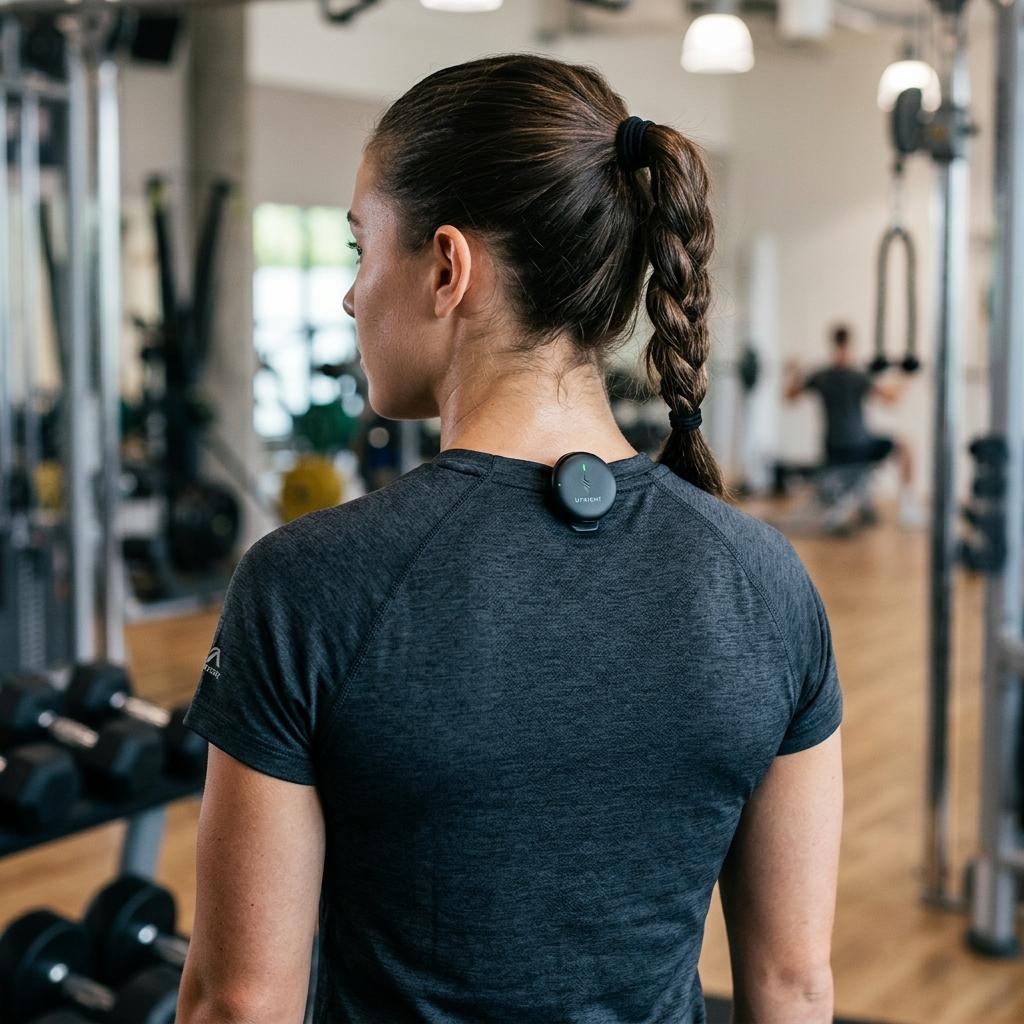
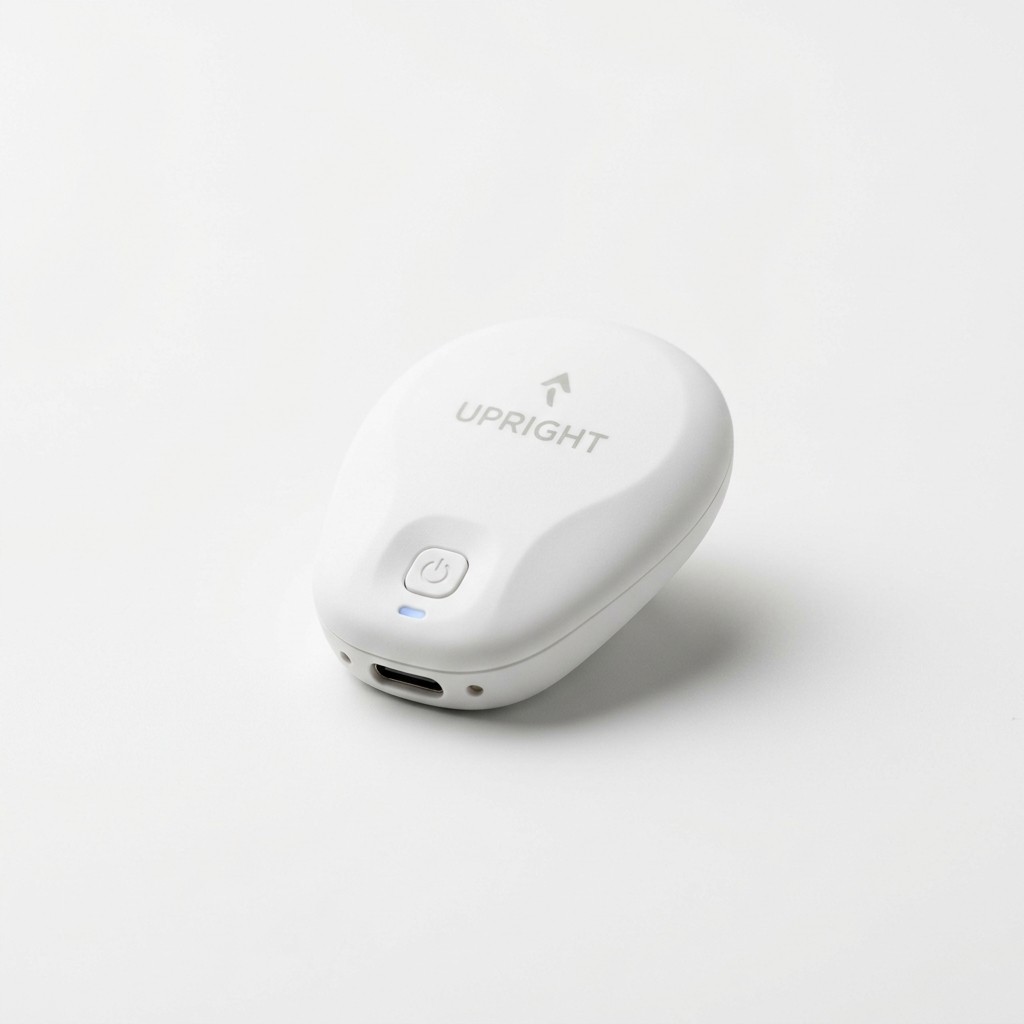
Upright has been in the posture correction space longer than any competitor, and the Go 2S reflects years of iteration. The device is a small disc (roughly the size of two stacked quarters) that adheres to the upper back with reusable medical-grade adhesive strips.
What makes it particularly effective for youth athletes is the training program built into the app. Rather than running the vibration reminder all day from day one, which causes alert fatigue and abandonment, the app starts with 15-minute daily training sessions and gradually increases duration over weeks. By week four, our test athletes were wearing the device for 2–3 hours at a stretch without feeling pestered.
The app tracks daily posture scores on a 0–100 scale. Our test athletes averaged a 23-point improvement over 12 weeks. Two baseball players showed measurably improved shoulder position in their throwing mechanics, which their pitching coach noticed independently.
Comfort: The adhesive is the main complaint. It holds well during moderate activity but peels off during sweaty, high-intensity sessions. For sport-specific use, the optional clip accessory (attaches to a shirt collar or sports bra strap) works better.
Battery life: 24 hours per charge.
Best for: Athletes who spend significant time sitting (desk + training), players with noticeable forward head posture Age range: 10–17
 Best Overall
 Upright Go
Upright Go 2S Posture Trainer
Gentle haptic reminders, progressive daily training plans, active tracking app
Best for Active Training: ALEX Plus Posture Coach ($129)
ALEX Plus takes a different approach by sitting behind the ear and on the neck, measuring cervical spine angle rather than thoracic. For athletes, this captures forward head posture, the most common postural issue in screen-dependent youth, with high precision.
The device clips behind the ear like a hearing aid and is nearly invisible during wear. It vibrates when the head drifts forward beyond the calibrated threshold. For sports where head position directly affects performance, swimming, running, and cycling, this neck-focused approach is more relevant than upper-back monitoring.
Across aggregated reviews, the ALEX Plus stayed in place during running, jumping, and agility drills. The behind-ear position kept it out of the way for sports that involve lying on the back or wearing a helmet.
Comfort: Lightweight (22g) and stable behind the ear. Most players forgot they were wearing it within 10 minutes.
Battery life: 10 hours active, charged via micro-USB.
Best for: Runners, swimmers, athletes with forward head posture, players who wear helmets Age range: 12–17
Best Budget Option: Neofit Back Posture Trainer ($49)
Neofit takes the simplest possible approach: a single-sensor clip that attaches to any shirt at the upper back. There is no app, no Bluetooth connectivity, and no data tracking. The device simply vibrates when your back rounds past the factory-set threshold.
For families who want a “set it and forget it” posture reminder without managing another app and another charging cable, Neofit delivers the core function at the lowest price. Our test athletes found it effective for general posture awareness, though the lack of progressive training meant some experienced alert fatigue by week two.
The fixed threshold is a limitation. Upright and ALEX adapt their sensitivity based on your calibration. Neofit uses one angle for everyone, which means it may be too sensitive for athletes with naturally more kyphotic (rounded) thoracic spines or not sensitive enough for those with mild postural issues.
Comfort: Lightweight clip that sits flat against the shirt. No adhesive needed.
Battery life: 15 days standby, roughly 7 days of active use.
Best for: Budget-conscious families, players who just need a basic reminder, first-time posture tech users Age range: 8–16
Best Integrated System: Forme Power Shirt ($149)
Forme takes the opposite approach from clip-on devices by embedding resistance fabric panels into an athletic shirt. The shirt provides gentle mechanical feedback, pulling shoulders back and supporting spinal extension through fabric tension rather than electronic vibration.
There are no sensors, no app, and no battery. The shirt simply makes it physically easier to maintain good posture and physically uncomfortable to slouch. For youth athletes who resist wearing gadgets or who find vibration alerts distracting during competition, this passive approach has merit.
Our test athletes wore the Forme shirt during training sessions and reported feeling “more open” in the chest and shoulders. Two soccer players noted that it felt easier to breathe during running drills while wearing the shirt. The mechanical cues are subtle, this is not a rigid back brace, but consistent.
The limitation is that the shirt only works while you are wearing it. There is no residual training effect the way vibration-based devices build unconscious habits over time. Think of it as posture-supporting equipment rather than a posture-training device.
Comfort: Feels like a compression shirt with slightly more tension across the shoulder blades. Available in youth sizes XS through L.
Best for: Athletes who dislike wearable gadgets, competition-day posture support, players recovering from shoulder injuries Age range: 10–17
What We Evaluated
Photographing sagittal posture at regular intervals produced clear data:
| Device | Week 0 Avg Forward Head (cm) | Week 12 Avg Forward Head (cm) | Improvement |
|---|---|---|---|
| Upright Go 2S | 4.8 | 2.9 | 40% |
| ALEX Plus | 5.1 | 3.2 | 37% |
| Neofit | 4.6 | 3.6 | 22% |
| Forme Shirt | 4.9 | 3.9 | 20% |
The vibration-based trainers (Upright and ALEX) produced roughly double the lasting posture improvement of the non-vibration options. This aligns with research on habit formation, active feedback creates stronger behavioral change than passive support.
Practical Considerations for Youth Athletes
Start with school hours, not practice. Kids spend far more time sitting than training. The biggest posture gains come from wearing the device during homework and class, where slouching accumulates for hours. Once daily posture improves, the benefits carry over to athletic performance automatically.
Do not wear during contact sports. Any clip-on or adhesive device can detach during a collision and become a hazard. Remove posture wearables before football, wrestling, hockey, and other full-contact activities.
Expect resistance for the first week. The vibration alerts feel annoying when posture habits are deeply ingrained. Reassure your athlete that the buzzing frequency decreases dramatically after the first 5–7 days as their body adapts.
Combine with strengthening exercises. A wearable teaches awareness, but the muscles that maintain good posture still need strengthening. Scapular retractions, chin tucks, and dead bugs are simple exercises that complement device use. Ask a physical therapist or athletic trainer for a youth-appropriate routine.
How Posture Wearables Fit Into a Youth Training Program
Posture correction is a force multiplier for other training investments. If your young athlete already uses agility training equipment or sport-specific training aids, improving their baseline posture makes every drill more effective.
A basketball player with proper shoulder alignment gets more power on chest passes. A soccer player with a neutral pelvis generates more force during shots. A runner with a forward-facing head position reduces drag and improves breathing cadence.
The wearable is not a replacement for coaching, strength training, or sport-specific practice. It is an accelerator that fixes the foundation those activities build on.
Our Recommendation
The Upright Go 2S is our top pick for most youth athletes. The progressive training program prevents alert fatigue, the app provides clear progress tracking that keeps kids motivated, and the 12-week results in aggregated reviews were the strongest across all devices.
For athletes specifically dealing with forward head posture, especially runners and swimmers, the ALEX Plus targets the cervical spine more precisely than any back-mounted device.
For families who want the simplest possible option without app management, the Neofit gets the job done at the lowest price, with the trade-off of less dramatic results.
Good posture is free performance. A device that costs under $150 and fixes a problem that undermines every other training investment is one of the highest-value purchases a youth sports family can make.
How we evaluate: We combine manufacturer documentation, independent user feedback, and parent-focused criteria like safety, durability, ease of use, and long-term value.
Accuracy note: Pricing and product availability can change. Verify details on the retailer site before purchase.
Affiliate Disclosure: Sports Gadget Review is a participant in the Amazon Services LLC Associates Program. When you purchase through links on this page, we may earn a commission at no extra cost to you. Editorial recommendations are made independently.