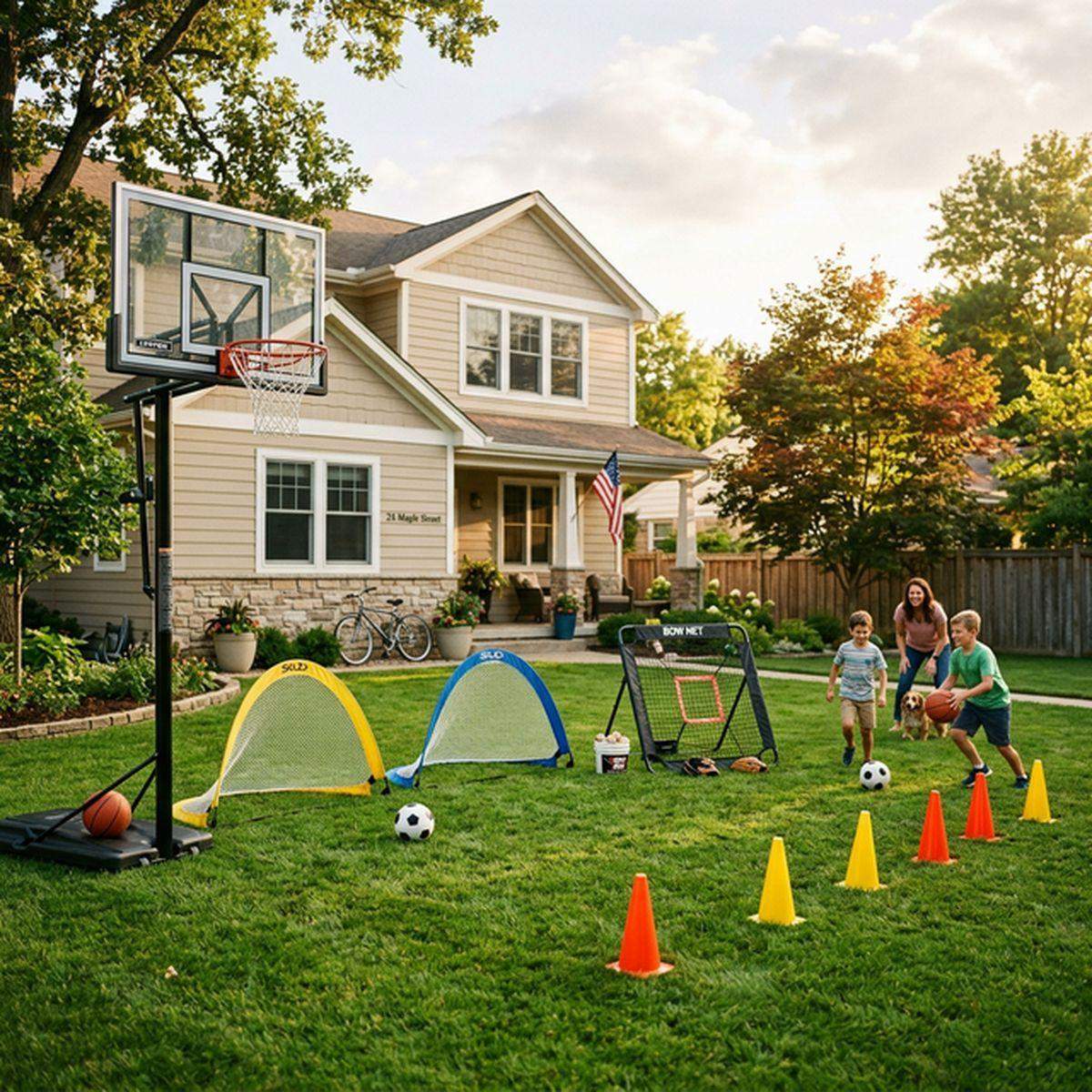
Part of our youth basketball training gear hub — see /basketball/ for the full lineup.
Related guides:
As an Amazon Associate we may earn a commission from qualifying purchases made through links on this page, at no extra cost to you.
A pool basketball hoop is one of the cheapest upgrades you can make to a backyard pool, and one of the few that reliably pulls teenagers off their phones and into the water. But the category is wider than most parents expect: floating rings that cost about as much as a pizza, bolt-down deck systems built to survive a decade of chlorine, and everything in between. Pick wrong and you get a rusted pole, a tipped-over base, or a rim that snaps the first time a cannonball splash hits it.
This guide synthesizes owner reviews, manufacturer specifications, and water-safety guidance from the CDC, the CPSC’s Pool Safely campaign, and the American Red Cross. We have not hands-on tested these hoops — this is a research-based buying guide, not a review with badges. (If you’re shopping for a driveway hoop instead, start with our portable basketball hoop stability guide or our in-ground vs portable comparison.)
Why a Pool Basketball Hoop Is Worth the Money
The appeal is simple: shooting games scale to any skill level. A five-year-old can lob a vinyl ball at a floating ring while grandparents run a slow-motion game of P-I-G from the shallows, and nobody needs to be able to dribble to participate. Pool hoops also extend how long a pool actually gets used on a given afternoon — a ball and a target turn “swim for twenty minutes and get out” into a two-hour game session.
There’s a basketball-development angle, too. If your kid plays organized ball, water shots are still reps: laying the ball up from an unstable base builds touch and soft hands. Just keep expectations realistic — a pool rim is a fun target, not a training system. For actual skill work at regulation height, our youth hoop height by age guide covers the rim heights USA Basketball and the NBA endorse for young players.
The Four Types of Pool Basketball Hoops
Floating hoops. An inflatable vinyl ring with a net stretched across it, exemplified by Intex’s floating hoop sets. No installation, no tools, and they store flat. The tradeoffs: they drift across the pool with the wind and every wake, and inflatable vinyl eventually leaks. Best for young kids, casual adult games, and above-ground pools where there’s nowhere to mount anything.
Base-filled portable systems. A vertical pole rising from a fillable plastic base, parked at the pool’s edge — the pool version of a driveway portable. GoSports’s poolside game is the best-known example. These need no drilling, can be rolled away, and play most like real basketball. The catch is stability: an underfilled or water-only base tips when adults hang off the rim.
Deck-mounted hoops. Bolted directly to the concrete or paver pool deck. This is the territory of Dunnrite, the long-established pool-basketball specialist, whose fixed systems are built around powder-coated steel and stainless hardware. Deck mounts are the most rigid and most permanent option — the backboard barely shakes — but you’re drilling into your deck, and removing the hoop later leaves anchor holes.
Rail and fence mount combos. Clamps or straps that attach a backboard to an above-ground pool’s top rail, a fence, or a deck railing. A good middle ground for above-ground pools, though fit varies by rail shape and width, so check the mounting range in the listing before buying.
How to Choose: What Actually Matters
Match the hoop to your pool first
In-ground pools with a surrounding deck can take any type. Above-ground pools usually can’t accept a deck mount unless you build or buy a platform, so floating hoops and rail-mount combos dominate there. Also measure where the base or posts will sit — a hoop that overhangs the pool edge takes deck space away from walkways, and the best placement is a corner or wall-side section away from the ladder and the deep-end entry.
Materials: rust is what kills pool hoops
A pool hoop lives in the harshest microclimate in your backyard — splashed with chlorinated water, baked by reflected sunlight, and left out for entire seasons. Cheap hardware-store hoops with standard plated fasteners develop rust streaks within a season or two. What holds up, based on both manufacturer material specs and long-term owner feedback:
- Stainless steel hardware on any bolt, clamp, or rim-attachment point — pool-specific brands like Dunnrite build around it for exactly this reason.
- UV-stabilized polyethylene for bases and backboards, the same resin family Intex and other pool manufacturers use across their products.
- Powder-coated steel poles are acceptable, but check owner reviews for chipping at the waterline; exposed steel rusts fast in pool splash zones.
The base: fill it completely, and prefer sand
The single most common complaint across owner reviews of base-filled pool hoops is tipping — and it’s almost always an underfilled base. Fill the base to the manufacturer’s specified volume, and where the design allows a choice, sand beats water: sand is denser than water, so a sand-filled base is heavier at the same volume and harder to tip. That’s the same physics we walk through in the driveway portable hoop stability guide. The tradeoff is that a sand-filled base is genuinely heavy to move and a nuisance to empty at season’s end.
Rim and backboard expectations
At pool-hoop prices, you’re choosing between a molded one-piece rim (fine for vinyl balls and soft shots) and a real steel rim with net hooks (needed if teenagers will dunk or hang). Backboards are polyethylene or acrylic; acrylic looks and responds more like a regulation board, polyethylene shrugs off chlorine and UV better. Don’t over-index on backboard size — most pools can’t back a shooter far enough away for a 44-inch board to matter.
The ball matters more than you’d think
Never use a full-size leather or composite ball in the pool. It waterlogs, gets heavy, and a soaked regulation ball hitting a hand or face at short range hurts. The vinyl or small rubber balls that ship with pool sets exist for a reason — if a set doesn’t include one, pool basketball ball listings carry them inexpensively.
Storage and the off-season
Drain the base before the first freeze in cold climates — expanding ice splits plastic bases, a recurring note in cold-climate owner reviews. Store the hoop indoors or cover it; even UV-stabilized resins degrade faster when left out year-round.
Pool Safety: The Non-Negotiables
A hoop changes how people move in and around your pool, so treat it as a safety decision, not just a toy purchase.
- Drowning is the leading cause of death for children ages 1–4, and the CDC’s drowning prevention guidance is blunt about the fix: constant, undistracted supervision any time children are in or near water. Games make supervision harder — everyone’s eyes follow the ball.
- Assign a water watcher. The American Red Cross water safety program recommends designating an adult who does nothing but watch the water during gatherings, rotating in shifts.
- Keep the deck clear. The CPSC’s Pool Safely campaign emphasizes keeping pool barriers and walking surfaces unobstructed. A hoop base belongs out of the main walking path, never blocking the ladder, steps, or the shallow-end exit.
- No diving for balls. Loose balls drift to the deep end and kids chase them. Make “walk or swim, never dive” a house rule, especially in above-ground pools that are shallow throughout.
Models Owners Keep Recommending
These are the names that recur across owner reviews and category roundups — presented as research synthesis, not test results. Prices and bundles change often, so check current listings:
Dunnrite Splash Hoop series — The deck-mounted benchmark. Stainless steel and powder-coated construction aimed at permanent installation, per Dunnrite’s own product materials. Best for in-ground pool owners who want a rock-solid target and don’t mind drilling. The honest tradeoff: it’s the most expensive path, and it doesn’t move.
GoSports Poolside Basketball Game — The popular base-filled middle ground. No drilling, real pole-and-net play, and it can be rolled out of the way. The recurring owner note is the same one that applies to every portable: fill the base completely or it tips.
Lifetime poolside adjustable systems — Lifetime brings its driveway-hoop engineering to poolside models with height adjustment, which matters if the hoop will serve both a 7-year-old and a 17-year-old. Check the listing for the adjustment range and base-fill requirements.
Intex Floating Hoop game — The budget floating pick from Intex’s pool-game lineup. Near-zero setup, ideal for younger kids and above-ground pools. Expect drift with wind and a finite lifespan for inflatable vinyl — at this price, replacing it every couple of summers is the plan, not a failure.
Frequently Asked Questions
Will a pool basketball hoop rust? Anything with non-stainless steel in the splash zone eventually will. Pool-specific brands use stainless hardware and UV-stabilized plastics precisely because of this; general-purpose cheap hoops rust fastest at bolts, rim attachments, and the waterline on poles. Rinse hardware with fresh water occasionally and it lasts far longer.
Water or sand in the base? Sand, whenever the base design allows it. Sand is denser than water, so the same base holds more weight and resists tipping better. Water is easier to drain and move, which matters if you’ll reposition the hoop constantly or winterize in a cold climate.
What height should a pool hoop be? There’s no governing standard for pool play — it’s fun-first. But if a young player is building shot habits, the age-based rim heights USA Basketball and the NBA publish for youth basketball are the reference point, and our hoop-height-by-age breakdown covers them. Lower and adjustable pool hoops are generally the better buy for mixed-age families.
Can I leave it set up all summer? Yes, with two caveats: keep the base out of the main walking path per Pool Safely’s guidance on clear pool surroundings, and plan to drain, dry, and store it before freezing weather. UV and chlorine take a season-by-season toll even on good materials.
Related Reading
How we evaluate: We combine manufacturer documentation, independent user feedback, and parent-focused criteria like safety, durability, ease of use, and long-term value.
Accuracy note: Pricing and product availability can change. Verify details on the retailer site before purchase.
Affiliate Disclosure: Sports Gadget Review is a participant in the Amazon Services LLC Associates Program. When you purchase through links on this page, we may earn a commission at no extra cost to you. Editorial recommendations are made independently.