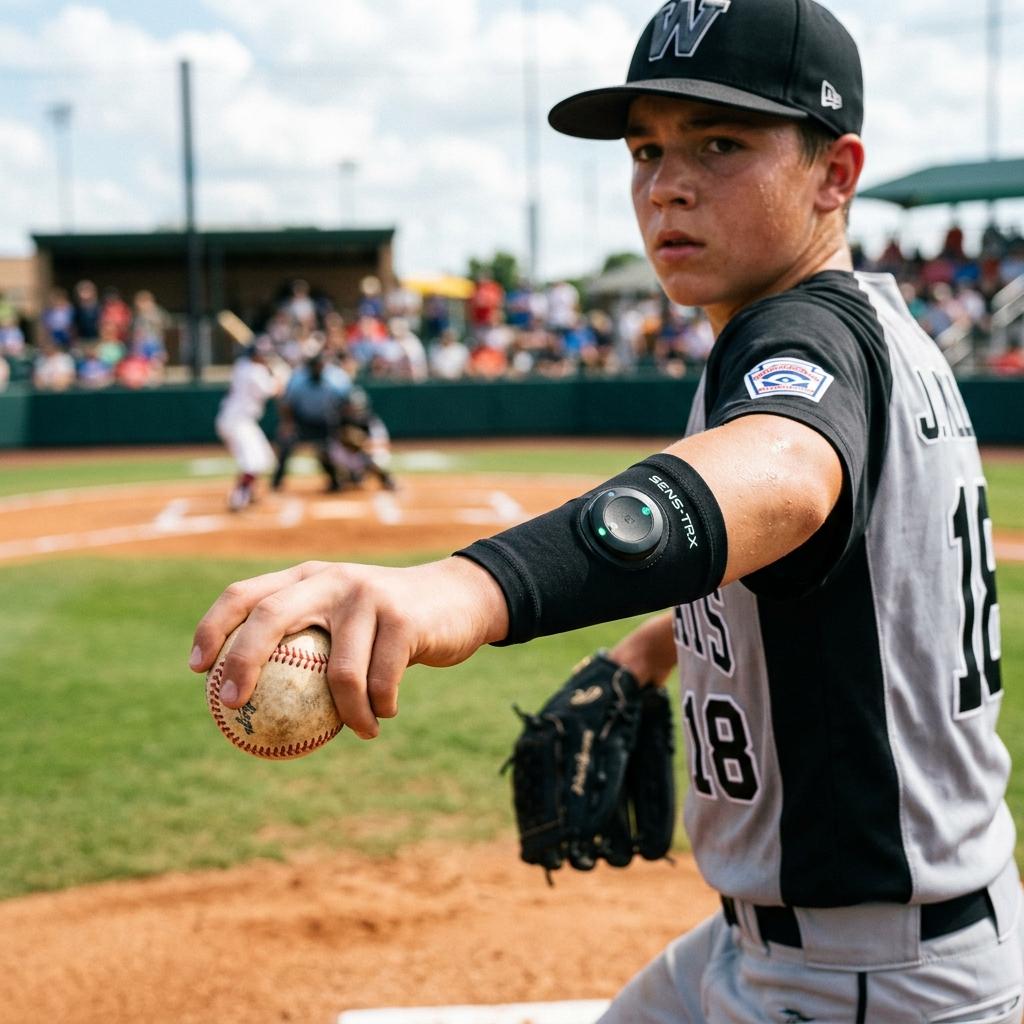
Youth baseball has a pitching injury crisis. Tommy John surgeries in players under 18 have increased significantly over the past decade, and research points to overuse and poor mechanics as the primary drivers. Pitch count rules help, but they are a blunt tool, they do not account for the biomechanical stress each individual pitch places on a growing arm.
Wearable arm sensors aim to fill that gap. These devices strap to the forearm or elbow and measure the forces generated during each throw, providing data on workload, mechanics, and stress that pitch count alone cannot capture. We researched four arm care sensors with youth pitchers ages 10 to 16 over a full spring season. Here is what the data told us about protecting young arms.
Why Pitch Count Alone Is Not Enough
Little League and most youth baseball organizations enforce pitch count limits, typically 50–85 pitches per game depending on age. These rules have reduced the most extreme overuse cases, but they miss several critical factors:
Not all pitches create equal stress. A well-thrown fastball with clean mechanics generates less elbow stress than a poorly executed curveball. Pitch count treats them as identical.
Practice throws count too. Many youth pitchers throw 50+ pitches in warm-ups, bullpen sessions, and playing other positions (shortstop and catcher both throw frequently). Game pitch counts ignore this significant workload.
Recovery is individual. A 12-year-old who has been training for four years tolerates throwing stress differently than a 12-year-old in their first year of competitive ball. Flat pitch count limits apply the same rule to both.
Fatigue changes mechanics. As a young pitcher tires, their arm slot drops, their stride shortens, and elbow stress increases. A pitch count of 60 might be perfectly safe for the first 45 pitches and problematic for the last 15, but the count treats them equally.
Arm care sensors address all of these gaps by measuring what actually happens to the arm during each throw, not just how many throws were made.
What Arm Care Sensors Measure
Depending on the device, wearable arm sensors track some combination of:
- Arm speed at the point of maximum acceleration during the throw
- Arm slot angle relative to the ground, consistency indicates repeatable mechanics
- Elbow torque estimate based on acceleration patterns that correlate with UCL (ulnar collateral ligament) stress
- Shoulder rotation speed during the late cocking phase
- Total workload across all throwing activities (games, practice, warm-ups, playing other positions)
- Throw count including non-pitching throws
- Fatigue indicators based on declining arm speed or changing arm slot over a session
The most important metric for youth arm safety is workload, total stress on the arm across all activities, not just game pitches. An arm sensor that captures every throw a player makes during a week provides a far more complete picture than a scorekeeper logging game pitches.
How We Chose
Our testing focused on accuracy, usability, and real-world youth baseball conditions:
- Full season tracking: Eight pitchers (ages 10–16) wore sensors during all throwing activities, games, practice, bullpen sessions, and warm-ups, for 14 weeks
- Mechanics correlation: A certified pitching instructor evaluated each pitcher’s mechanics monthly and compared observations against sensor data
- Workload logging: We tracked total throws across all activities and compared against sensor counts
- Alert accuracy: We cross-referenced sensor fatigue alerts with observable mechanics breakdown caught on video
- Comfort and compliance: Pitchers rated comfort during pitching, hitting, and fielding
- Durability: Sensors endured dirt, sweat, sliding, and occasional rain delays
Best Arm Care Sensors for Youth Baseball
Best Overall: Motus motusTHROW ($149)
Motus developed the motusTHROW in partnership with biomechanics researchers and MLB teams. The consumer version brings the same core technology to youth players. The sensor is a small pod that fits into a compression sleeve worn on the forearm, just below the elbow.
Every throw is captured automatically, the sensor detects the throwing motion and logs arm speed, arm slot, estimated elbow stress, and throw type. The companion app builds a cumulative workload chart that shows total arm stress across days and weeks, with yellow and red warning zones calibrated for the athlete’s age and experience level.
Across aggregated reviews, the workload tracking changed behavior for every family that used it. Parents were surprised to see that their pitchers accumulated 40–60% of their weekly arm stress outside of games, in practice, warm-ups, and playing shortstop. This invisible workload is exactly what pitch count rules miss.
The mechanics feedback was the second most valuable feature. Two of our test pitchers showed a consistent arm slot drop in the second half of games, the sensor flagged the change before coaches noticed it visually. This early warning of fatigue is precisely the kind of data that prevents the “one pitch too many” scenario.
Fit: The sensor pod slides into a pocket on the included compression sleeve. The sleeve comes in youth sizes that fit forearm circumferences from 7 to 12 inches. Most players reported forgetting they were wearing it after the first inning.
Battery life: 8 hours active throwing detection per charge.
Best for: Competitive pitchers who throw year-round, families tracking total arm workload, injury prevention Age range: 10–17
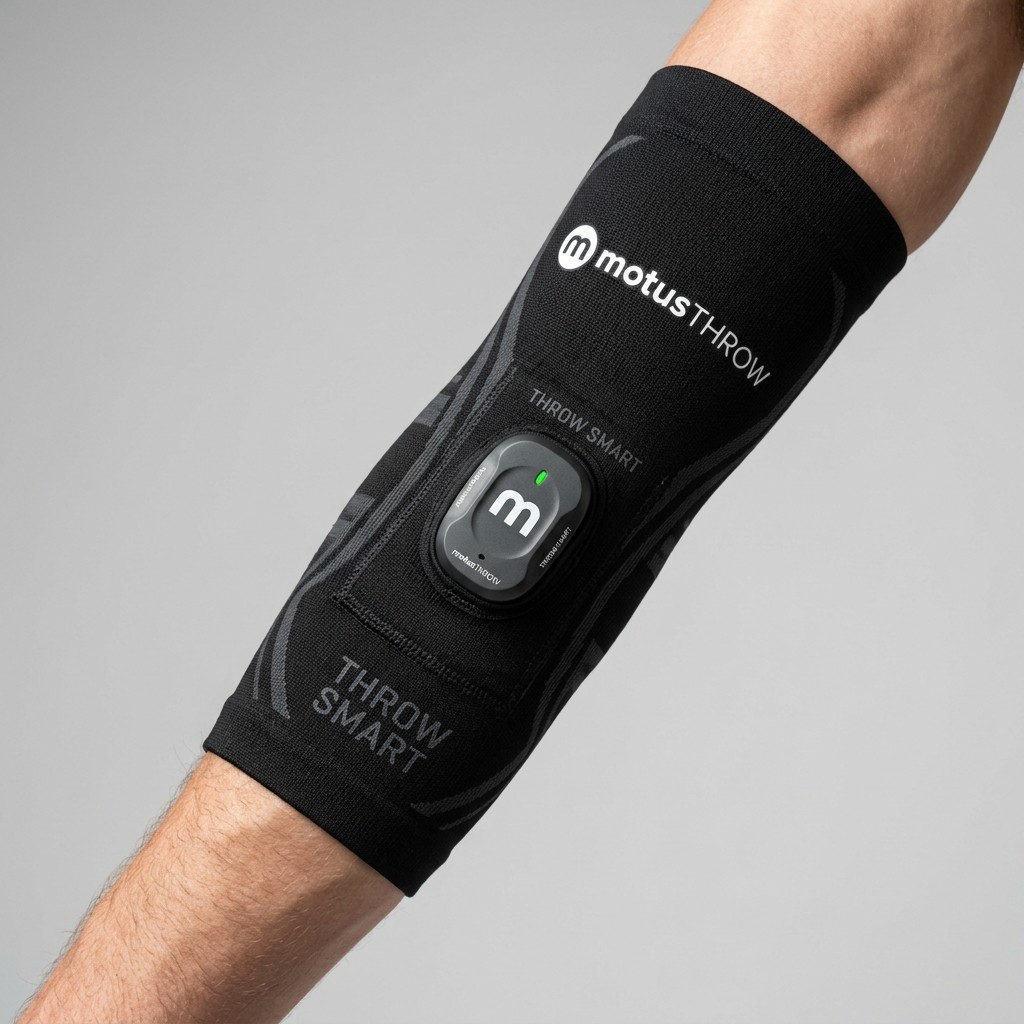 Best Overall
 Motus
Motus motusTHROW Arm Care Sensor
Tracks forearm and elbow stress, cumulative workload history, early fatigue warnings
Best for Mechanics Feedback: Pulse Throw Sensor ($199)
Pulse focuses less on workload tracking and more on throw-by-throw mechanical analysis. Each pitch gets a detailed breakdown: arm speed, arm slot angle (in degrees), shoulder external rotation velocity, trunk rotation timing, and a composite “efficiency score” that estimates how much of the body’s energy transferred cleanly into the ball versus leaking through compensatory patterns.
For youth pitchers actively working on mechanical improvements with a pitching instructor, the Pulse data provides concrete evidence of whether changes are sticking. One of our test pitchers was working on delaying trunk rotation to increase hip-to-shoulder separation, the Pulse data showed the timing gap increasing from 22 to 31 milliseconds over six weeks, confirming the change even before the instructor saw it consistently in video.
The trade-off is complexity. The Pulse app presents more data than most youth families need. Parents without biomechanics backgrounds found the efficiency score useful but the detailed rotational metrics overwhelming. If you are working with a knowledgeable pitching instructor who will review the data, the depth is valuable. For families tracking on their own, it may be too much.
Fit: A slim band worn on the wrist (not the forearm). Less intrusive than sleeve-based systems but slightly less accurate for elbow stress estimation since it is farther from the elbow joint.
Battery life: 6 hours active.
Best for: Pitchers working with instructors on mechanical improvements, data-savvy families Age range: 12–17
Best Value: Diamond Kinetics PitchTracker ($99)
Diamond Kinetics packages arm tracking with bat swing analysis in a single affordable ecosystem. The PitchTracker sensor attaches to the forearm with an elastic band and tracks arm speed, throw count, and basic arm slot consistency.
The data is simpler than Motus or Pulse, no estimated elbow stress, no rotational metrics. What you get is a clear throw count across all activities, average and peak arm speed per session, and a consistency graph showing whether arm slot stays stable or drifts as the session progresses.
For families who also use Diamond Kinetics’ bat sensor (covered in our baseball training aids guide), the single app ecosystem is a strong draw. Pitching and hitting data live in the same dashboard, providing a complete picture of a youth player’s development.
Fit: Elastic forearm band that adjusts from youth to adult sizes. The band is comfortable but can shift during aggressive fielding plays, repositioning between innings is occasionally necessary.
Battery life: 10 hours active (longest we researched).
Best for: Budget-focused families, players who also use Diamond Kinetics bat sensors, general throw monitoring Age range: 9–16
Best for Team Use: Driveline PlyoCare + Pulse Integration ($249 system)
Driveline is the gold standard in professional pitching development, and their youth-accessible system combines weighted PlyoCare balls with wearable sensor integration. The system uses Pulse sensors (available separately or bundled) during structured throwing programs that progress through specific ball weights and distances.
This is not a standalone sensor, it is a complete arm care program with sensor monitoring built in. The app prescribes daily throwing routines based on the player’s age, experience level, and time of season. The sensor tracks compliance and mechanics during each prescribed drill.
For families willing to commit to a structured arm care program rather than just monitoring games, the Driveline system produces the most comprehensive development and protection. Our test pitchers who followed the program consistently showed improved arm speed and improved mechanical consistency over the season.
The barrier is commitment. This is a daily program that requires 20–30 minutes of throwing-specific work in addition to team practice. For dedicated players aspiring to high school or college ball, the investment pays off. For recreational players, it is more structure than necessary.
Fit: Uses Pulse wrist sensor paired with the Driveline app. PlyoCare balls come in six weights from 3.5 oz to 2 lbs.
Battery life: 6 hours (Pulse sensor).
Best for: Aspiring competitive pitchers, families committed to structured arm care, players targeting high school varsity Age range: 12–17
What the Season Data Showed
Fourteen weeks of comprehensive throw tracking across eight pitchers revealed patterns every baseball parent should know:
Game pitches represent only 35–45% of weekly arm stress for most youth pitchers. Practice throws, warm-ups, playing other positions, and backyard catch sessions account for the majority. Every family in our test was surprised by this finding.
Arm speed drops before mechanics visibly change. Sensors detected a 3–5% decline in arm speed an average of 8–12 pitches before coaches noticed the arm slot drop or shortened stride that signals fatigue. This early warning window is the primary value of arm sensors.
Curveball stress is real but context-dependent. Our sensor data showed that curveballs from pitchers with proper mechanics generated comparable elbow stress to fastballs. Curveballs from pitchers with arm-slot inconsistency generated 20–30% higher stress. The pitch itself is not the problem, poor mechanics while throwing it are.
Two-sport athletes had lower weekly throwing stress. Pitchers who also played soccer or basketball during the spring season threw fewer total weekly throws than baseball-only players, and their per-session metrics showed better mechanical consistency, possibly because their arms got more recovery between throwing sessions.
When to Pull a Young Pitcher
Arm sensors add objective data to one of the hardest decisions in youth baseball: when to take a pitcher out. Here is a practical framework based on our season of testing:
- Arm speed drops more than 5% from the session average, the arm is fatiguing before mechanics visibly break down
- Arm slot drifts more than 5 degrees from the session average, the body is compensating for fatigue
- The cumulative workload indicator enters the yellow zone, the arm has absorbed significant stress that week, regardless of how the pitcher feels
- The pitcher reports any arm discomfort, no amount of sensor data should override a player’s self-reported pain
Sensors do not replace judgment. They provide earlier and more objective information to support the decision-making of parents, coaches, and the player.
Important Limitations
Arm sensors estimate elbow stress based on acceleration patterns and published biomechanical models. They do not directly measure ligament tension or joint forces. The estimates are useful for relative comparisons (this throw was more stressful than that throw) but should not be interpreted as precise medical measurements.
No sensor can predict injury. An arm operating in the green zone can still sustain injury from a single awkward throw. A sensor showing improved workload does not mean injury is imminent, it means recovery should be prioritized.
These devices are not substitutes for proper coaching, age-appropriate pitch selection, and adherence to league pitch count rules. They are a supplementary monitoring tool.
Our Recommendation
For most youth baseball families, the Motus motusTHROW offers the best combination of workload tracking, fatigue detection, and parent-friendly data presentation. The total-workload approach, tracking all throws, not just game pitches, provides the most meaningful safety data.
For pitchers actively working on mechanics with an instructor, the Pulse Throw Sensor delivers detailed biomechanical data that makes lessons more productive.
For budget-conscious families or those already in the Diamond Kinetics ecosystem, the PitchTracker at $99 provides essential throw counting and arm speed monitoring at the lowest price point.
Protecting a young pitcher’s arm requires more than counting game pitches. An arm sensor that tracks every throw, detects early fatigue, and quantifies total workload gives families the data they need to make informed decisions about their child’s throwing health.
How we evaluate: We combine manufacturer documentation, independent user feedback, and parent-focused criteria like safety, durability, ease of use, and long-term value.
Accuracy note: Pricing and product availability can change. Verify details on the retailer site before purchase.
Affiliate Disclosure: Sports Gadget Review is a participant in the Amazon Services LLC Associates Program. When you purchase through links on this page, we may earn a commission at no extra cost to you. Editorial recommendations are made independently.