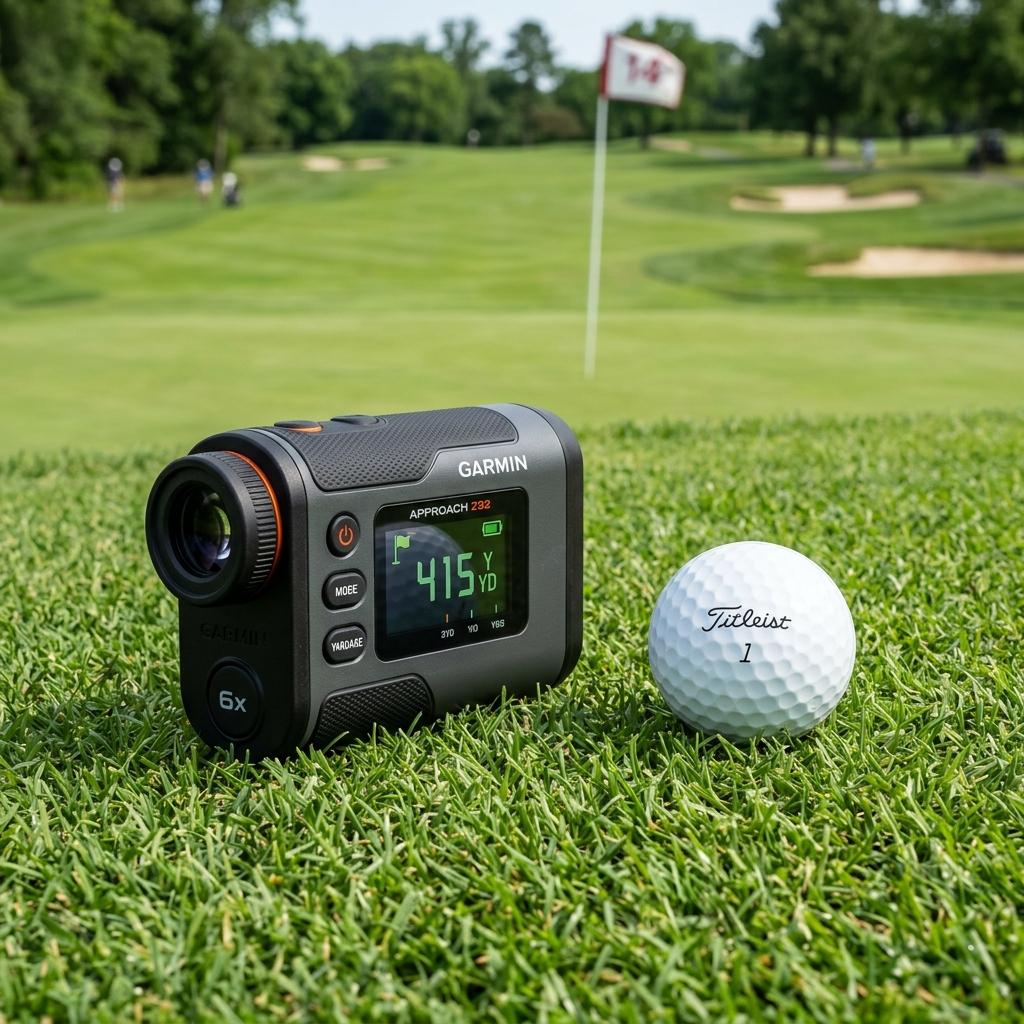
A rangefinder answers how far is that flag (or bunker, or layup). It does not measure ball speed, launch, or spin. That other tool is a launch monitor — a different aisle, a different room, and a different page: golf launch monitors for home practice. Budget launch units stay on launch monitors under $500. A net without either gadget is golf practice nets.
This page stays under $200, on the course: slope vs no-slope, and the pin-lock / jolt twins that decide whether you are ranging the flag or the tree behind it.
Desk research only: manufacturer accuracy, magnification, slope-toggle, and range sheets (Precision Pro, Blue Tees, Gogogo, TecTecTec, Callaway, Caddytek), plus the Amazon title mash-up those six create. Not a lab test this desk ran, not a personal “I stopped recommending Bushnell” anecdote, and not a star rating. ±0.5 yard and ±1 yard lines below are published claims, not a survey this desk walked.
Listing check: Amazon “golf rangefinder under $200” and “slope rangefinder” results mix (1) Precision Pro NX10 vs NX9 / older NX leftovers, (2) Gogogo Sport Vpro GS24 vs GS24-class twins (GS202 / older Vpro tiles in the same red housing), (3) Blue Tees Series 3 Max vs Series 3 / Series 2, (4) slope with an external toggle vs slope as a mode button (tournament officials care), (5) pin-lock / pulse / jolt vs first-target vs scan, and (6) a Bushnell Tour photo on a no-name laser. Confirm slope toggle vs software mode, a flag-lock / pin-sensor line on the sheet, 6x vs 7x, and that you did not click a launch monitor or GPS watch. Street prices move; treat any dollar figure here as a listing check, not a lock.
Who should buy this — and who should skip
Weekend and league golfers. You want a number to the pin and maybe slope on hilly munis. Sub-$200 lasers now publish the same ±1 yard class as units that used to cost $400.
Tournament / club-championship. You need a physical, externally visible slope-off switch so an official can see it. Mode-button-only slope is the skip.
Skip first. Skip a rangefinder if what you actually wanted was carry, spin, and launch in the garage — that is home launch monitors, not this page. Skip a $400 Bushnell if you shoot 85–100 and range one flag per hole. Skip slope if your club bans it and the listing cannot disable slope in a way an official can see. Skip a second laser “for accuracy” if you already own a ±1 yard unit that locks the pin.
Slope vs no-slope
Slope uses the angle to the target and publishes a plays-like number. A 150-yard shot to a pin well above you might display 157. Flat Florida / links-style courses: the adjustment is often 1–2 yards — skip-buy on paying extra for slope. Appalachian / mountain / PNW tracks: 10–15 yards of plays-like is common, and slope earns its keep.
USGA Rule 14.3 allows a distance-measuring device and does not allow slope (or other club-selection advice) in competition. Tournament-legal in practice means: slope off, and off in a way a walking official can verify. External toggle + “SLOPE OFF” in the viewfinder is the pattern Precision Pro, TecTecTec, Callaway, and Blue Tees advertise. A Gogogo-class mode button with no external tell is the casual-round tool, not the club-championship tool.
At this price, slope is usually a $20–40 delta, not a $200 one. Five of the six units below include it. The only reason to buy no-slope on purpose is a club that wants a unit that cannot turn slope on.
Pin-lock twins (the actual miss)
The laser is easy. Hitting the flag instead of the tree line is the work.
| Mode name (varies by brand) | What it is supposed to do | Typical fail |
|---|---|---|
| Pin-lock / flag / pulse / jolt | Prefer the closer, thinner target; vibrate when it agrees | Tree behind the green at 220+ yards |
| First target / closest | Take the nearest return | A cart or a sprinkler head |
| Scan / continuous | Stream numbers as you pan | You wanted a single flag lock |
| Slope on (plays-like) | Adjust for elevation | Using it in a tournament |
“Jolt,” “Pulse Vibration,” and “Pin Sensor” are marketing cousins. They all mean: wait for the vibrate, do not take the first flash if the background is a treeline. Published max range (650–1,000 yards) is usually a reflective target. On a real flag, treat 250–400 yards as the useful window on this price aisle, with more hunting past 200 if your hands are not still.
No image stabilization is the other twin vs a $400 Bushnell. Hand shake at 250 yards is why people think the cheap unit is “inaccurate” when they ranged the tree.
Shortlist
1. Precision Pro NX10 — best overall under $200
 Best Overall
 Precision Pro
Precision Pro NX10 Slope Golf Rangefinder
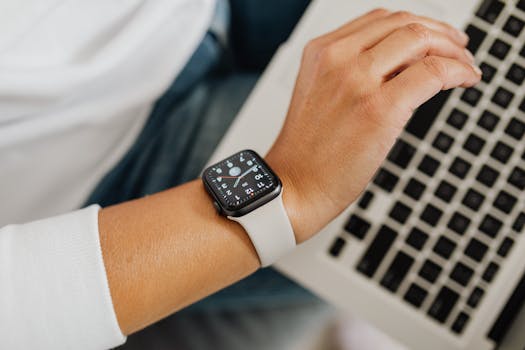
External slope toggle, pulse lock, magnetic mount; confirm NX10 not NX9
Precision Pro publishes the NX10 with a ±0.5 yard claim, 6x, slope with a physical toggle, pulse / flag vibration, and a magnet for a cart bar. Lifetime CR2 replacement is a Precision Pro policy — read the current card, not a screenshot. No stabilization: past 200 yards, brace your hands or take a second press.
Buy it when you want one tournament-legal-when-off unit and a magnet, and you do not want to over-think the aisle.
Skip it when the tile is an older NX9 or a no-magnet NX sibling at the same price.
2. Blue Tees Series 3 Max — 7x optics twin
 Best Optics
 Blue Tees
Blue Tees Series 3 Max Golf Rangefinder
7x + slope toggle; confirm Series 3 Max, not Series 2 / 3 non-Max
Blue Tees publishes 7x on the Series 3 Max — the extra magnification vs 6x is the reason this tile exists. Slope toggle, OLED-class display, flag-lock jolt. Magnet is often a separate $15 add-on; confirm the box. Battery door with a screw is the owner complaint that repeats.
Buy it when distant pins or less-than-perfect eyesight are why the last 6x unit felt “slow.”
Skip it when the listing is Series 3 (non-Max) or Series 2 in a Max photo.
3. Gogogo Sport Vpro GS24 — slope under $100
 Best Value
 Gogogo Sport
Gogogo Sport Vpro GS24 Golf Rangefinder
Slope via mode button — casual rounds; not the external-toggle tournament pick
Gogogo publishes ±1 yard and slope on the GS24-class units at a price that used to be a sleeve of balls. Acquisition is slower than the $199 tiles; slope lives on a mode button, not an external switch. Fine for casual golf. Weak for a rules official who wants to see slope off from five feet away.
Buy it when you lose gadgets, you play casual, and you wanted plays-like numbers without $200.
Skip it when you need an external slope toggle, or the tile is a different GS-prefixed twin.
The other three
TecTecTec VPRO500S (~$149). External slope toggle, ±1 yard class, a brand that has been in this aisle for years. Buy it on sale under the NX10 street price. Skip it at NX10 money.
Check TecTecTec VPRO500S on Amazon
Callaway 300 Pro Slope (~$179). Name brand, external toggle, ±1 yard, 6x. Published 1,000-yard max is a reflective-target number. Heavier (high-8 oz class) than the others. Fine if you wanted Callaway on the cart magnet.
Check Callaway 300 Pro Slope on Amazon
Caddytek CaddyView V3 (~$119, no slope). The no-slope tile. Lightest class here. Buy it when the club wants a unit that cannot enable slope. Skip it if the Gogogo at $89 with slope is legal where you play and you wanted plays-like numbers.
Check Caddytek CaddyView V3 on Amazon
Quick compare (published class)
| Rangefinder | Slope | Magnification | Published accuracy | Pin-lock class |
|---|---|---|---|---|
| Precision Pro NX10 | Yes (external toggle) | 6x | ±0.5 yd | Pulse / flag |
| Blue Tees Series 3 Max | Yes (toggle) | 7x | ±0.5 yd | Jolt / flag-lock |
| Gogogo GS24 | Yes (mode button) | 6x | ±1 yd | Flag-lock, slower |
| TecTecTec VPRO500S | Yes (toggle) | 6x | ±1 yd | Flag |
| Callaway 300 Pro | Yes (toggle) | 6x | ±1 yd | Pin acquisition |
| Caddytek CaddyView V3 | No | 6x | ±1 yd | Standard flag |
Accuracy copy vs a 7-iron
±0.5 vs ±1 yard is finer than most amateurs’ dispersion. The value is committing to a club, not clubbing to the half-yard. Accuracy drops past the useful flag window and on non-reflective pins. If you wanted launch and spin in a garage stall, you are on the wrong page — go to home launch monitors.
Rangefinder vs GPS watch
A laser is any target you aim at. A golf GPS watch is pre-mapped front/mid/back. Many players carry both. If you pick one for approach shots, pick the laser. A multi-sport watch that also has a golf course map is a watch purchase, not this aisle.
Frequently asked questions
Are cheap rangefinders accurate enough?
Published ±1 yard inside ~250 yards is tighter than typical 15-handicap scatter. The miss is locking the tree, not the ±1.
Can I use slope in a tournament?
Only with slope disabled in a way the committee accepts — usually an external toggle. Mode-button-only units may get a question. This desk is not a rules official; read the current USGA 14.3 local rule card.
How long does a CR2 last?
Owner reports that repeat: a season of 2–3 rounds a week is common. Precision Pro’s battery-mailer is a brand policy, not a physics law. Any pharmacy CR2 is the backup.
Rangefinder or a $400 Bushnell?
Stabilization, glass, and a slightly faster jolt. Worth it for people who range three targets a hole in wind. Not worth it for a weekend 90.
Related Articles
How we evaluate: We combine manufacturer documentation, independent user feedback, and parent-focused criteria like safety, durability, ease of use, and long-term value.
Accuracy note: Pricing and product availability can change. Verify details on the retailer site before purchase.
Affiliate Disclosure: Sports Gadget Review is a participant in the Amazon Services LLC Associates Program. When you purchase through links on this page, we may earn a commission at no extra cost to you. Editorial recommendations are made independently.